Central Asia Traveling in Turkmenistan
Turkmenistan is an ancient land full of exotic beauty, historical fossils and relics, and bizarre natural phenomena. However, unlike other countries encountered during Central Asia travel, Turkmenistan is still relatively unknown among the general public as a tourist attraction. It has, therefore, remained a sort of treasure cove of unusual travel delights. At one time during its long history, Turkmenistan was known as “the Queen of the World” to the caravans traveling through on the Great Silk road. It is now becoming a fascinating featured country of Central Asia travel.
Turkmenistan shares land borders with Afghanistan and Uzbekistan. Like its neighbors Iran and Kazakhstan, Turkmenistan borders on the Caspian Sea. Turkmenistan is one of the most curiously intriguing Central Asia republics on our Five Stans tour. It’s highly unusual, other- worldly type of landscapes are a highlight of Central Asia travel. Roughly eighty per cent of the country is comprised of the Kara-Kum desert, a name which translates to “Black Sand Desert”. This desert is one of the biggest expanses of scorching hot desert terrain on earth. This is where the strange landscapes- which are called “lunar landscapes” -are created. The Kara-Kum desert also has strange gas craters burning and blazing that seem to emerge out of nowhere.
This is also a country of colorful, deep canyons with some of the most bucolic environments in the world, and there are several vibrantly thriving oases located throughout the diverse terrain of Turkmenistan. In addition, there are pleasant tropical seashore resorts with exotic flowers and plants helping to attract tourists on Central Asia travel. The stunning mountain ranges that arise to the south and the east of the country provide yet another facet of diversity.
This exotic land is also a very important site in terms of anthropology and archeology. It is full of ancient artifacts, utensils and historic relics. There are a significant amount of fossils, such as authentic dinosaur footprints. There are even ancient art forms preserved here that serve to help us imagine the daily lifestyles of ancient civilizations. It is clear that Turkmenistan has a great deal to offer those who undertake Central Asia travel.
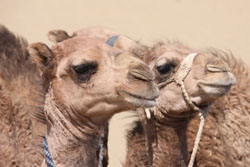
The people of this ancient land are warm and welcoming, frequently inviting tourists on Central Asia travel to sit at their table and share a traditional meal of “plov”. This customary cuisine consists of rice, chunks of mutton, and grated yellow turnips. Also served at the dinner table in Turkmenistan are herbed pastries and breads, spiced pilaf, and camel milk.
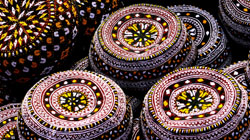
The Sunday bazaars are yet another feature of Turkmenistan that entices tourists of Central Asia travel. The bazaars are lively, colorful and filled with the sounds of music. You can also hear the upbeat sounds of vendors and shoppers as they hustle and bustle about their business. Tourists to Turkmenistan can actually watch as skilled artisans create gorgeous embroidery, silver jewelry, richly-colored Persian carpets and rugs, and sensational luxury fabrics like silk.

Ashgabat
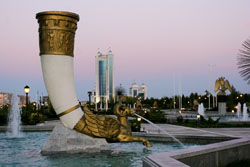
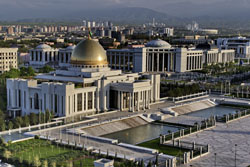
Situated between the Kara Kum Desert and the Kopet Dag mountain range, Ashgabat has a population of about four hundred thousand. It is a relatively new town carved out of an aul, or Turkmen village, of the same name in 1818. The original founding fathers were Russian troops who landed in present-day Turkmenbashy in 1869. These troops built a fortress on a high hill to accommodate their administration. In subsequent years however, the fortress, serving as a focal point, attracted a host of merchants and other entrepreneurs who sought to expand their markets and enter new adventures. These newcomers constructed a number of buildings and factories on the other side of town around the Trans Caspian Railway station. Today, large numbers of Five Stans tourists who decide to book Central Asia travel visit Ashgabat and the nearby city of Nisa, the ancient capita of the Parthians.
Dashaguz
Dashoguz is the largest city in the northern region of Turkmenistan. It is reached by means of a direct train route of about three hundred eleven miles from Ashgabat, across the Kara-Kum Desert. The main sights lie outside of the city, and they are among the most fascinating things to see during Central Asia travel. One of the noteworthy attractions is the ruins of Konye-Urgench, an ancient fortress town with relics that date back to the fourteenth century. There is a small fee for entrance but it is well worth the price. Another captivating sight is the Kutlug Timur Minaret, one of the tallest minarets in Asia, built in the 1320’s. Tourists are also impressed by the Sultan Tekesh, Turabeg Khanym, and Najim-ed-din Kubra Mausoleums.
Mary
Mary is an oasis city in the Karakum Desert located on the Murghab River. Declared the cultural capital of the CIS in 2012, it has many famous mausoleums and other highlights to delight those who undertake Central Asia travel.