Traveling across Central Asia means stepping into the heart of the ancient Silk Road — a region shaped by empires, scholars, merchants, and nomads. On this journey through the Five Stans, you’ll encounter some of the most legendary UNESCO World Heritage Sites, each offering a unique perspective on the region’s cultural and historical legacy.
Ichan Kala, Khiva (Uzbekistan): A Fortress Frozen in Time
Hidden behind perfectly preserved mudbrick walls, Ichan Kala is the inner fortress city of Khiva and the first UNESCO site of Uzbekistan. This oasis town was the last major stop for Silk Road caravans before crossing the Karakum Desert. Inside the old walls, everything feels frozen in time: narrow alleys, turquoise domes, wooden-pillared mosques, and traditional houses built centuries ago.
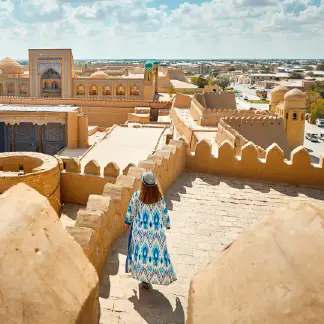
Landmarks such as the unfinished but iconic Kalta-Minor Minaret, the atmospheric Juma Mosque, and the Kunya-Ark fortress reveal the artistic and architectural brilliance of the Khorezm civilization. Walking through Ichan Kala feels like stepping back into the world of merchants, desert explorers, and scholars.
Ancient Nisa (Turkmenistan): Legacy of the Parthian Empire
Just outside Ashgabat lies Ancient Nisa, the royal seat of the Parthian Empire, one of Rome’s greatest rivals. Founded around the 3rd century BCE, Nisa stands as a powerful reminder of a dynasty that once controlled vast territories stretching from the Middle East to Central Asia.
The ruins of fortresses, ceremonial halls, wine cellars, and administrative buildings offer a glimpse into the sophistication of Parthian culture. Archaeologists have uncovered beautiful ivory rhytons, sculptures, and finely crafted ornaments that showcase the artistic mastery of this ancient kingdom. Inscribed as a UNESCO site in 2007, Nisa remains one of the most important archaeological treasures in Turkmenistan.
Kunya-Urgench (Turkmenistan): Monuments of a Silk Road Capital
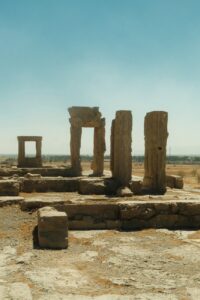
Once the capital of the Khwarezm Empire, Kunya-Urgench thrived between the 10th and 14th centuries as one of the most influential Silk Road cities. Although heavily damaged by the Mongol invasion, the city’s surviving monuments demonstrate exceptional architectural achievement.
The towering Kutlug-Timur Minaret, rising over 60 meters, dominates the skyline. Nearby, the Turabek-Khanym Mausoleum impresses with its exquisite tiles and one of the most beautiful domes in the region. Mausoleums of sultans, fortified structures, and the remains of ancient caravan routes together illustrate the city’s former grandeur. Recognized by UNESCO in 2005, Kunya-Urgench continues to inspire travelers with its solemn beauty and deep history.
Samarkand (Uzbekistan): Crossroads of Cultures and Timurid Splendor
Few cities capture the imagination like Samarkand, one of the oldest continuously inhabited centers in the world. Its UNESCO designation — “Samarkand: Crossroads of Cultures” — reflects its long-standing role as a global hub of science, trade, and art.
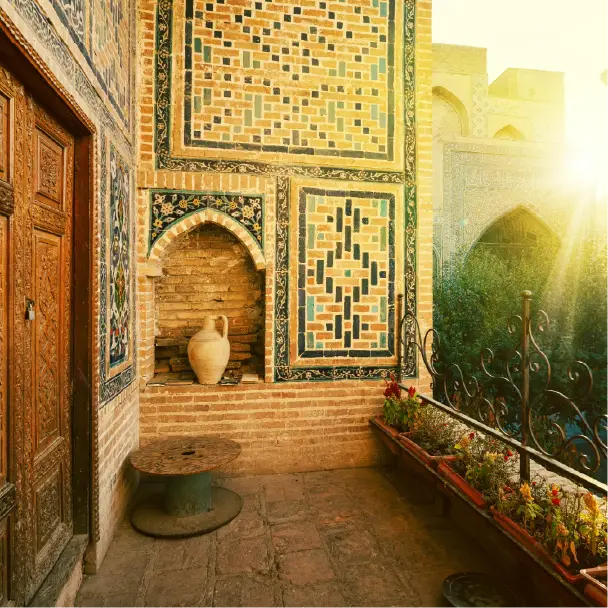
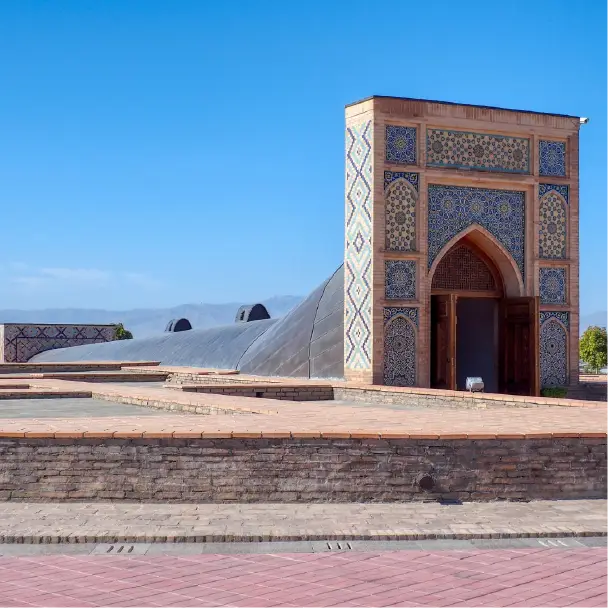
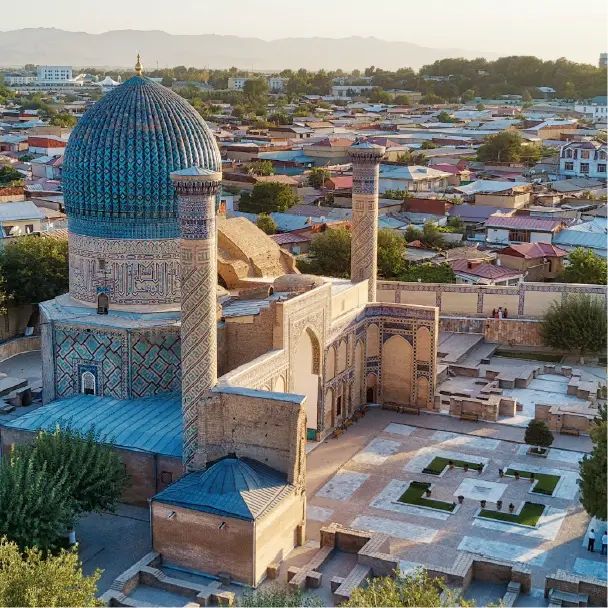
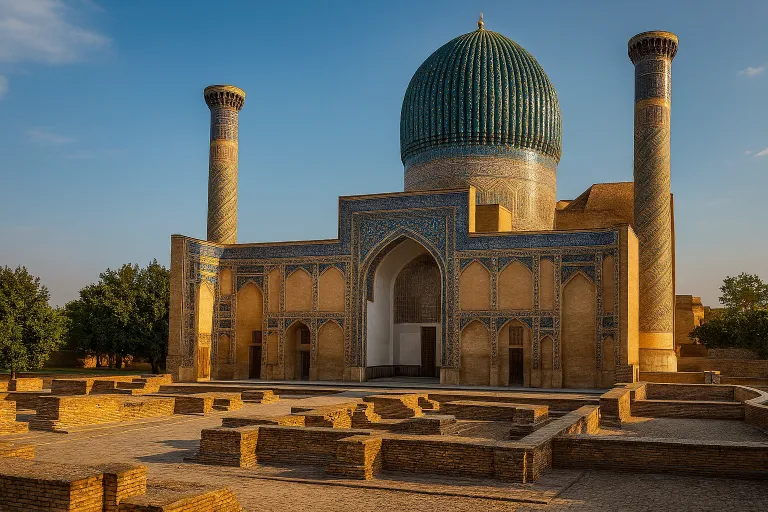
The monumental Registan Square is the city’s heart, surrounded by three majestic madrasas that represent the peak of Timurid architectural style. The luminous Gur-Emir Mausoleum, where Amir Timur (Tamerlane) rests, the once-mighty Bibi-Khanym Mosque, and the sacred necropolis of Shah-i-Zinda all tell the story of a city shaped by visionaries and master craftsmen. With its blue domes, mosaics, and sweeping history, Samarkand is the crown jewel of Silk Road heritage.
From Empires to the Silk Road: The Shared Heritage of the Five Stans
From Khiva’s desert citadel to the Parthian strongholds of Nisa, from the spiritual monuments of Kunya-Urgench to the Timurid splendor of Samarkand, the Five Stans together offer a rare opportunity to explore more than 2,000 years of human history.
These UNESCO sites are not just landmarks — they are living chapters of the Silk Road, waiting to be discovered.
Frequently Asked Questions About UNESCO World Heritage Sites
What is UNESCO and what does it mean for heritage sites?
UNESCO stands for the United Nations Educational, Scientific and Cultural Organization. Its World Heritage mission is to identify, protect, and preserve cultural and natural sites around the globe that are considered to be of “outstanding universal value” to humanity. When a site receives this designation, it gains international recognition, which often unlocks access to crucial funding and expert conservation assistance. This ensures these irreplaceable cultural and environmental treasures are preserved and remain intact for future generations to study and appreciate.
Why are UNESCO World Heritage Sites important in Central Asia?
In Central Asia, UNESCO designations are vital because they provide legal and financial protection to the remnants of the Great Silk Road. This vast region, which acted as the critical crossroads for global trade and cultural exchange for over a thousand years, is home to stunning examples of ancient trade cities, Islamic architecture, and nomadic heritage. The UNESCO status helps prevent decay, guides sustainable tourism development, and ensures the history of this vital global corridor is maintained, allowing travelers to step directly into the past.
How many UNESCO World Heritage Sites are in the Five Stans?
Some of the most famous cultural sites you’ll encounter on a journey through the region include:
– Uzbekistan: The historic centers of Bukhara, Samarkand (Crossroads of Cultures), and the walled Inner City of Khiva (Itchan Kala).
– Turkmenistan: The ancient Parthian fortress of Nisa and the ruins of Kunya-Urgench.
– Kazakhstan & Kyrgyzstan: Major segments of the extensive Silk Roads: Chang’an-Tianshan Corridor network.
– Natural Sites: Important mountain ranges and unique ecosystems like the Western Tian-Shan, shared across all three southern Stans, are also globally recognized natural heritage sites.
Can travelers visit UNESCO sites on a Five Stans journey?
Absolutely—visiting these protected sites is the centerpiece of any comprehensive Central Asia tour! Our 19-day five stans tour is specifically designed to maximize your time exploring these globally important treasures. From walking through the ancient madrassahs and mosques in Uzbekistan to exploring archaeological ruins in Turkmenistan, you will literally walk the paths of the Silk Road traders. In fact, nearly every major city and historical stop on the tour itinerary is centered around one of these culturally significant landmarks.

Join Us on a 5 Stans Tour
Discover more from East Site Travel
Subscribe to get the latest posts sent to your email.