Uzbekistan Culture
Uzbekistan’s culture is a rich tapestry woven from centuries of Silk Road exchange, where Persian, Turkic, Arab, Mongol, and Russian influences blend into something uniquely Uzbek. At its heart is a deep tradition of hospitality — guests are treated with genuine warmth, offered tea, bread, and conversation long before business is discussed. This spirit of generosity shapes daily life and is one of the first things travelers notice.
Traditional arts remain a vibrant part of the country’s identity. Cities like Samarkand and Bukhara are known for intricate ceramics, hand‑woven carpets, and the famous ikat silk of Margilan. These crafts aren’t just souvenirs; they’re living traditions passed down through generations. Music and dance also play an important role, from the rhythmic doira drum to the long‑necked dutar, often performed during weddings and community celebrations.
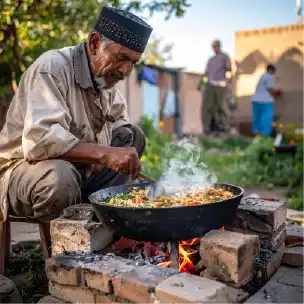 Food is another window into Uzbek culture. Plov — a hearty dish of rice, carrots, and meat — is more than a meal; it’s a symbol of hospitality and pride. Bread (non) is treated with respect and often baked in clay tandoor ovens, while dishes like lagman noodles and samsa pastries reflect the country’s diverse regional influences.
Religion and modern life coexist comfortably. While Uzbekistan is a predominantly Muslim country, its approach is moderate and culturally rooted rather than strict. You’ll see this balance in everything from traditional family customs to the relaxed, welcoming atmosphere in cities.
Whether you’re exploring ancient monuments or sharing tea with locals, Uzbekistan’s culture offers a blend of history, artistry, and everyday warmth that makes the country feel both timeless and deeply alive.
Tashkent

Tashkent, the capital of Uzbekistan, is a dynamic blend of ancient heritage and modern life. Wide tree-lined boulevards, lively bazaars, and impressive Soviet-era architecture meet centuries-old mosques and madrasas. One surprising highlight is the Tashkent Metro — not only efficient and clean, but also one of the most beautiful in the world, with each station decorated like a work of art. From the buzzing Chorsu Bazaar to leafy parks and trendy cafés, Tashkent offers a refreshing and authentic introduction to Central Asia.
Khast Imam Complex
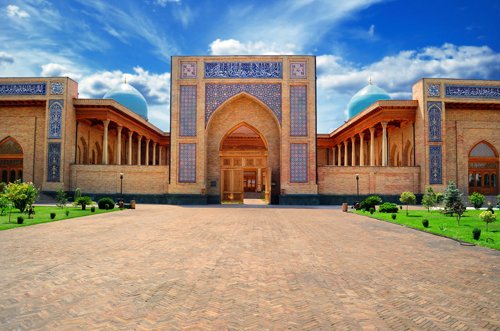
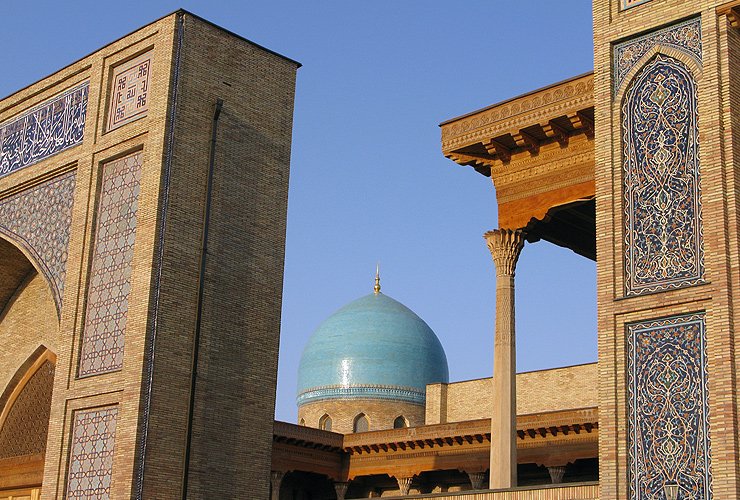
Khast Imam Complex is the spiritual heart of Tashkent and a must-visit for those interested in Islamic heritage. It features beautiful mosques and madrasas, and is home to one of the world’s oldest Qurans — the 7th-century Osman Quran, displayed under glass. The complex blends ancient architecture with modern design, including the stunning Hazrati Imam Mosque built in 2007. Legend says that Khazrati Imam, buried here, spoke 72 languages!
Chorsu bazaar
Chorsu Bazaar is Tashkent’s oldest and most famous market, located in the heart of the Old Town. Its giant blue dome is a local landmark. Inside, you’ll find fresh produce, spices, bread, crafts, and souvenirs.
The bazaar has existed since the 9th century and once stood at the crossroads of Silk Road trade routes. It’s not just a market — it’s a lively glimpse into everyday Uzbek life and history.
Museum of Amir Timur
Amir Timur Museum in Tashkent honors the legacy of the famous conqueror. Opened in 1996, it features a beautiful blue dome, grand chandelier, and over 5,000 artifacts from the Timurid era. The design echoes the architecture of Samarkand, making it both a cultural and visual highlight.
Museum of Handicraft Art
Museum of Handicraft Art is a hidden gem in Tashkent, set in a former palace. It displays colorful ceramics, wood carvings, embroidery, and jewelry—all handmade by Uzbek artisans. The building itself, with ornate ceilings and walls, is as beautiful as the exhibits.
Samarkand
Samarkand is a city of legends, over 2,700 years old, and one of the most important centers of the ancient Silk Road. Blending many cultures and influences, it has long been a crossroads of civilizations. With its rich history and vibrant atmosphere, Samarkand continues to inspire travelers from around the world.
Paper Mills Factory
Just outside Samarkand, Konigil Paper Mill keeps the ancient art of mulberry paper alive. Visitors can watch the traditional process—boiling, pounding, drying—and even try making a sheet themselves. The paper lasts for centuries and makes for a unique souvenir.
Afrasiab Museum
Afrasiab Museum sits atop the ancient ruins of Afrasiyab, Samarkand’s original city destroyed by the Mongols in the 13th century. Opened in 1970, it showcases over 22,000 artifacts, including rare 7th–8th century Sogdian frescoes from the Hall of Ambassadors—vivid scenes of royal processions and diplomatic gifts . The museum’s design reflects Soviet-era modernism and honors Samarkand’s layered history, making it a fascinating and immersive stop for history lovers.
Ulugbek’s observatory
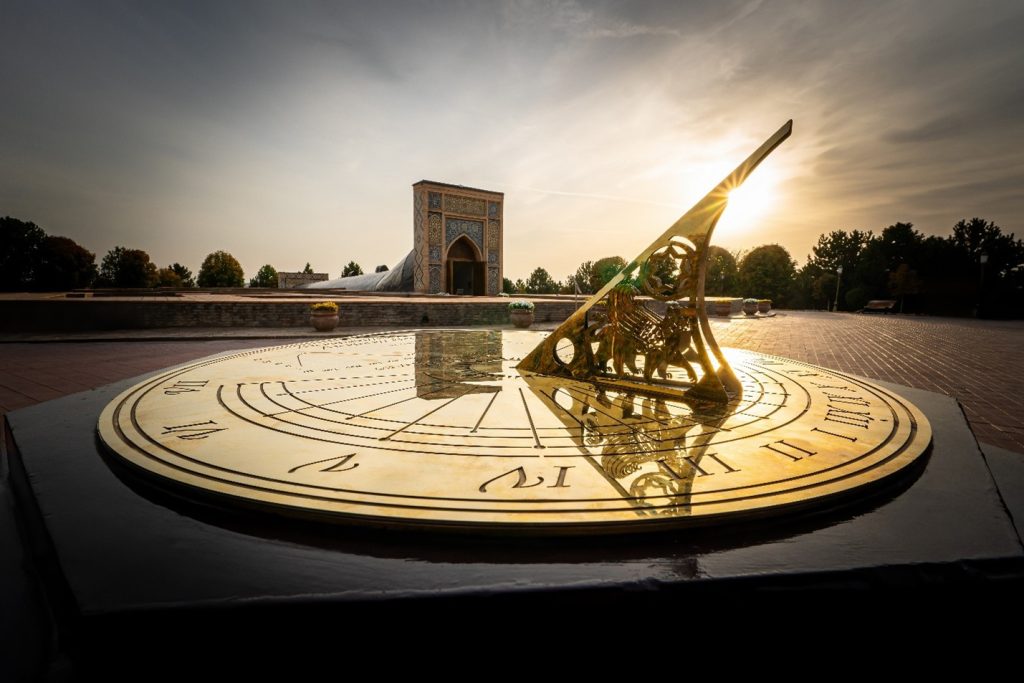
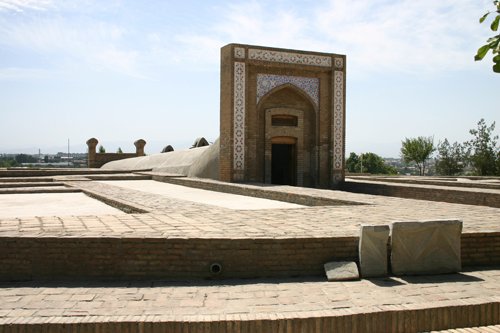
Ulugh Beg’s Observatory in Samarkand was built in the 15th century by the astronomer-ruler Ulugh Beg. Using a giant underground sextant, he calculated the length of the year with amazing accuracy—just 1 minute off. Though the observatory was destroyed long ago, its remains still showcase the region’s rich scientific legacy.
Registan Square
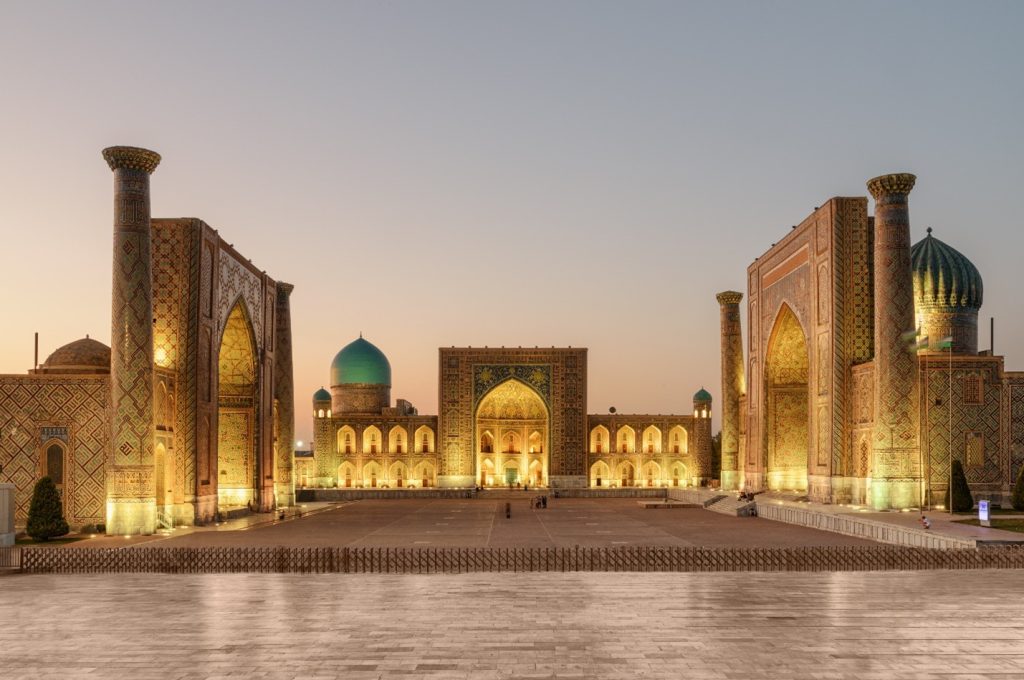
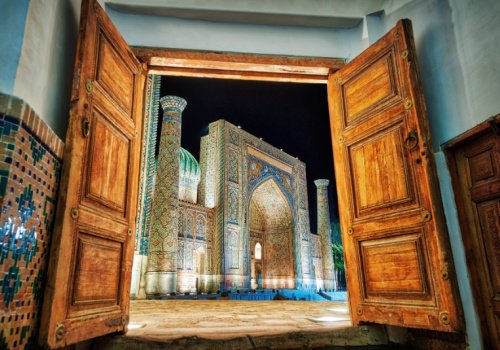
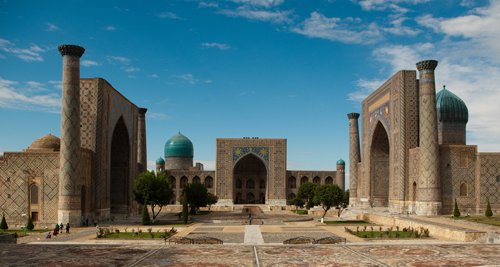
Registan Square is the historic centerpiece of Samarkand—a vast plaza once known as the “sandy place” and the heart of the Timurid Empire . It’s surrounded by three grand madrasahs built between the 15th and 17th centuries, showcasing dazzling blue tilework and Persian architecture. Originally a spot for royal announcements, markets, and even public executions, today it’s a UNESCO-listed marvel and venue for festivals like Sharq Taronalari.
Gur Emir Mausoleum

Gur Emir Mausoleum in Samarkand is the majestic tomb of the great conqueror Timur (Tamerlane), built in the early 15th century. Its stunning azure dome and richly decorated interior embody Timurid architecture and craftsmanship . Beyond Timur, the mausoleum also honors his sons and grandsons, making it a royal necropolis . One fascinating fact: the dome’s stunning design inspired later buildings across Central Asia, including the famous Humayun’s Tomb in Delhi . Palaces within the complex, polished marble walls, and glittering internal tiles create a serene, timeless atmosphere—an essential stop in historic Samarkand.
Shaki Zinda Necropolis
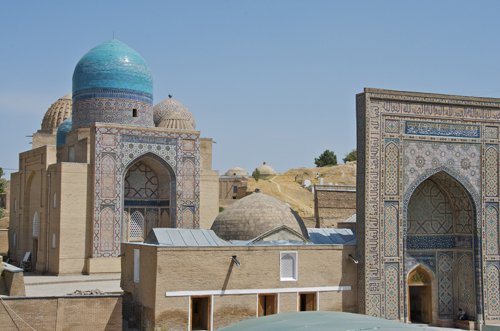
Shah-i-Zinda is a breathtaking necropolis in Samarkand, famous for its vibrant blue tilework and sacred atmosphere. Legend says it holds the tomb of Qusam ibn Abbas, cousin of the Prophet Muhammad. With over 20 mausoleums, it’s a spiritual and architectural gem.
Bibi-Khanum Mosque
Bibi-Khanym Mosque is a grand 15th-century landmark in Samarkand, built by Timur to be one of the largest mosques in Central Asia. Its massive turquoise dome soars 40 m high, and the courtyard once held space for up to 10,000 worshippers . Sadly, its ambitious scale led to structural cracks soon after completion, and it fell into ruin after an 1897 earthquake—though major restoration began in the 1970s. Legend has it the mosque was conceived by Timur’s wife, Bibi-Khanym, and that the architect’s love for her cost him dearly
Central bazaar of Samarkand – Siab
Siab Bazaar is Samarkand’s largest and most lively market, located near the historic Bibi-Khanym Mosque. It’s a bustling hub where locals shop for fresh produce, spices, dried fruits, sweets, and handmade goods. The bazaar is not only a great place to explore everyday life, but also to taste authentic flavors of Uzbekistan. Here, we’ll try the famous Samarkand round bread (non), known for its dense texture, decorative patterns, and unique taste—baked only in this region using traditional clay ovens. A visit to Siab Bazaar is a true sensory experience and a must for any traveler.
Bukhara
Bukhara is one of Central Asia’s most legendary cities, a living museum filled with over 2,000 years of history. Once a major stop on the Silk Road, it is home to stunning madrasas, domed bazaars, and centuries-old minarets that rise above sunbaked alleys. The Old City is a UNESCO World Heritage Site, where every corner tells a story of scholars, traders, and empires. With its timeless architecture and deeply spiritual atmosphere, Bukhara offers a truly immersive step into the past.
Caravanserai Rabat-i-Malik on the way from Samarkand to Bukhara
Rabat-i-Malik Caravanserai is one of the oldest surviving examples of Silk Road architecture in Central Asia. Built in the 11th century, it once served as a fortified inn for merchants and travelers crossing the desert between Bukhara and Samarkand. Today, only parts of the grand portal and walls remain, standing alone in the open steppe — a haunting reminder of the region’s trading past. Its carved brickwork and scale still impress, offering a glimpse into the glory of ancient routes.
Abdulla’s pottery house
Abdulla’s Pottery House is a cozy, family-run workshop where centuries-old ceramic traditions come to life. Located in a historic pottery town, the studio showcases handmade pieces crafted with local clay and natural pigments. Visitors are welcomed with a short demonstration of the pottery-making process and offered a warm cup of tea. It’s a charming and personal stop that connects you to the heart of Uzbek craftsmanship.
Chor Minor memorial
Chor Minor is a small but striking monument in Bukhara, built in 1807 by a Turkmen merchant. Its name means “Four Minarets,” and each of the four blue-domed towers has a unique design. The structure once served as the entrance to a madrasa, now lost. Despite its size, it’s one of the city’s most beloved and photogenic spots.
Samanid dynasty mausoleum
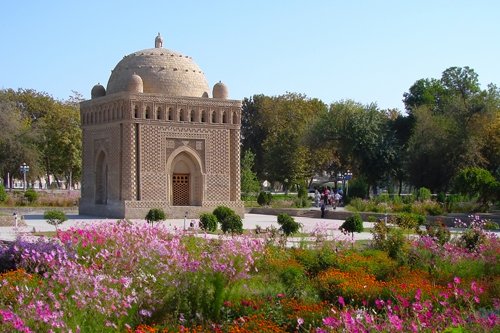
The Samanid Mausoleum in Bukhara is one of the oldest and most important examples of Islamic architecture in Central Asia. Built in the 9th–10th centuries, it was the resting place of Ismail Samani, founder of the Samanid dynasty. The structure is made entirely of baked bricks, arranged in intricate patterns that change with the light. Despite over a thousand years of history, it has survived almost untouched.
Chashma Ayub Mausoleum
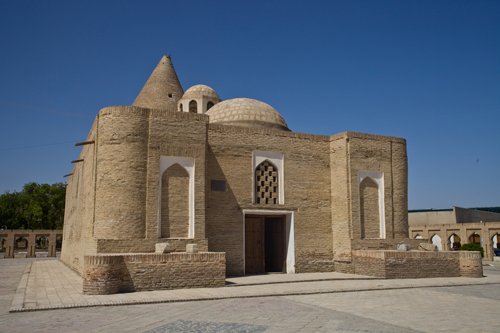
Chashma Ayub Mausoleum, meaning “Job’s Spring,” is a sacred site in Bukhara linked to the legend of the prophet Job. It’s believed he struck the ground here, bringing forth healing water. The current structure dates to the 12th–16th centuries and features a distinctive conical dome. Today, it also houses a small water museum.
Bolo – Khauz Mosque
Bolo-Khauz Mosque is one of Bukhara’s most elegant landmarks, built in the early 18th century. It stands out with its beautiful wooden columns carved with intricate patterns and a painted ceiling. Located across from the Ark Fortress, it once served as the Emir’s Friday mosque. The name means “mosque by the pond,” referring to the nearby water basin.
The Ark Fortress – Citadel
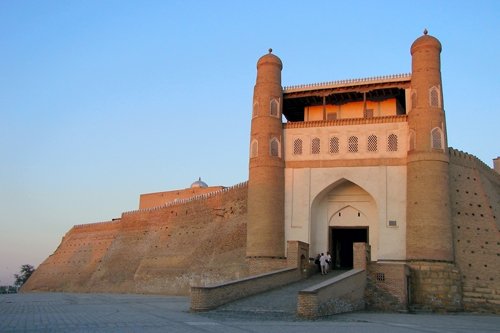
The Ark Fortress is Bukhara’s ancient citadel and the oldest structure in the city, with origins dating back over 2,000 years. It was once home to emirs, their courts, and soldiers. The massive walls enclosed palaces, mosques, and government buildings. Today, it’s a museum complex offering a glimpse into royal life and Bukhara’s rich history.
Kalon Complex
The Kalon Complex is the heart of historic Bukhara and a masterpiece of Islamic architecture. It includes the towering Kalon Minaret, Kalon Mosque, and Mir-i-Arab Madrasah. The minaret, built in the 12th century, was so impressive that Genghis Khan spared it during his invasion. The complex remains an iconic symbol of the city’s spiritual and architectural legacy.
Magoki Attori Mosque.
Magoki Attori Mosque is one of the oldest mosques in Bukhara, dating back to the 9th–10th centuries. Built on the site of a former Zoroastrian temple, it reflects the city’s layered religious history. Its partially sunken structure and intricate brickwork make it unique. The mosque also served as a carpet museum in Soviet times.
Ulugbek and Abdulazizi Khan madrasahs
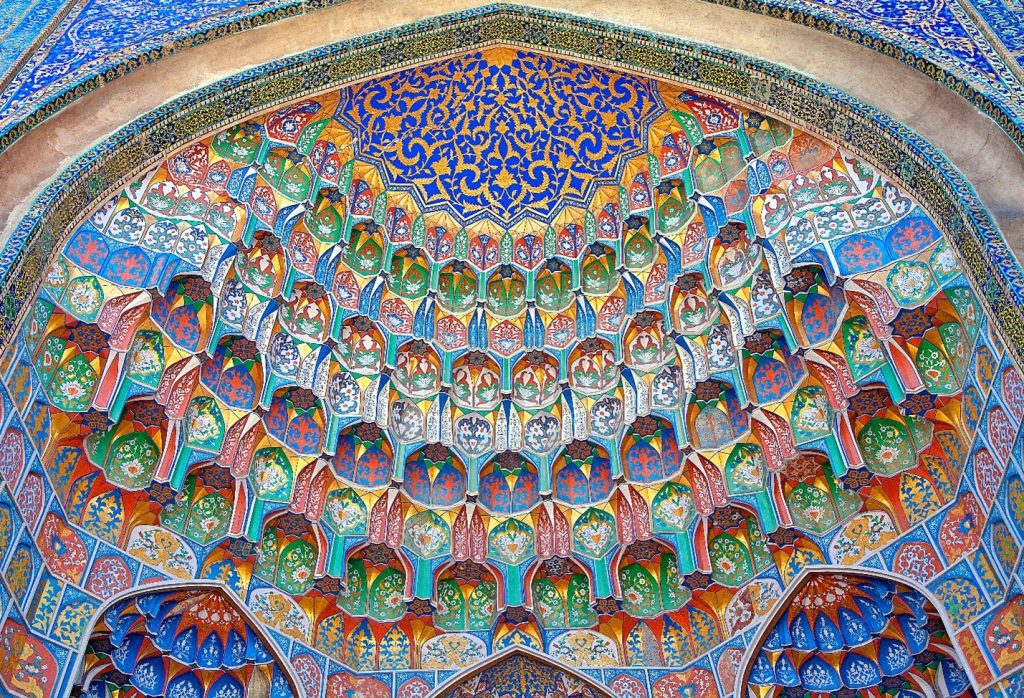
Ulugbek and Abdulaziz Khan Madrasahs stand opposite each other in Bukhara, forming a beautiful architectural ensemble. Ulugbek Madrasah, built in 1417, is one of the oldest in Central Asia and reflects the Timurid era’s focus on science and learning. Across from it, Abdulaziz Khan Madrasah was built two centuries later and is richly decorated with colorful mosaics and muqarnas. Together, they show the evolution of Islamic architecture in Bukhara.
Reservoir Lyabi Khauz
Lyabi Khauz is a peaceful reservoir in the heart of Bukhara, surrounded by centuries-old madrasahs and shady mulberry trees. Built in the 17th century, it was once part of the city’s water supply system. Today, it’s a popular gathering place for both locals and tourists. The area around it is full of cafes, street life, and traditional charm.
Emir Said Olimkhan
Emir Said Olimkhan was the last ruler of the Bukhara Emirate, reigning from 1911 to 1920. Educated in Russia, he promised reforms but soon returned to strict traditional rule. After the Red Army invaded, he fled to Afghanistan, reportedly taking enormous treasures with him. His escape marked the end of centuries of monarchical rule in Bukhara.
Museum of Decorative- Applied Art Khiva
Museum of Decorative and Applied Arts in Khiva is located inside the historic Islam Khodja Madrasah. It displays traditional Khorezm crafts like wood carving, ceramics, embroidery, and jewelry. The setting itself, with carved columns and domed halls, adds to the charm. It’s a great place to see the artistic heritage of the region up close.
Khiva
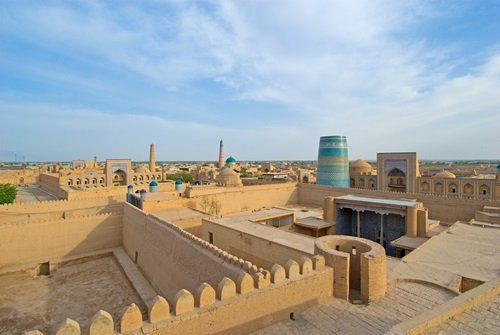
Khiva is one of Uzbekistan’s most atmospheric cities, where legend and architecture meet under desert skies. Once the capital of the Khiva Khanate, it was a major center of trade, scholarship, and culture on the Silk Road. Within its ancient walls lies a treasure trove of minarets, madrasas, and palaces — many beautifully preserved in the open-air museum of Ichan Kala. Unlike any other city, Khiva offers an immersive journey into the past, with its quiet courtyards, sunlit brickwork, and timeless rhythm of life.
Ichan Kala
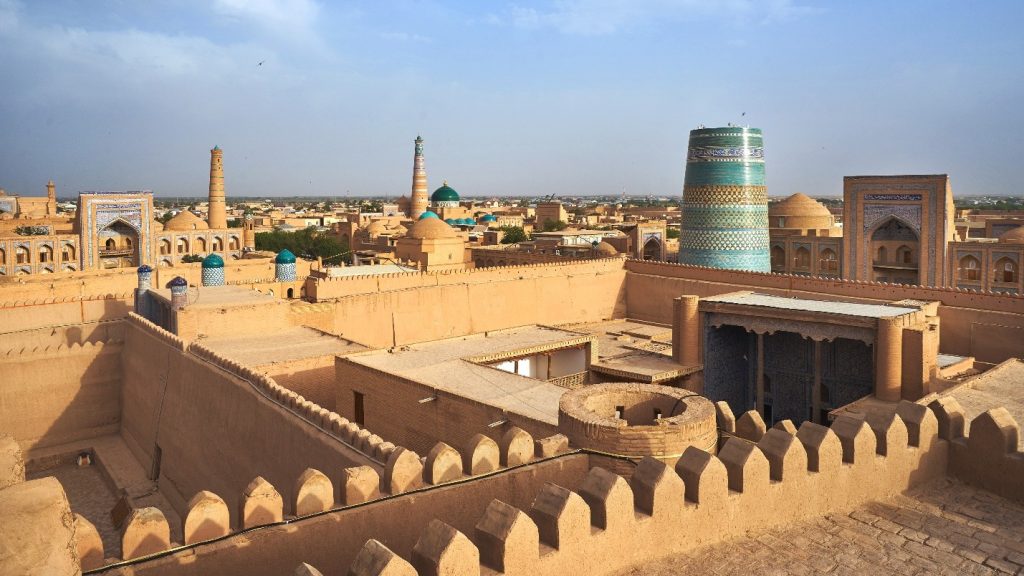
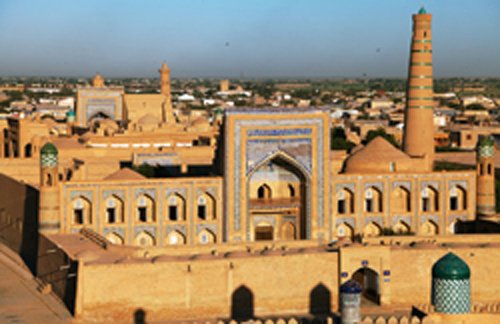
Ichan Kala is the walled old city of Khiva and a UNESCO World Heritage Site. Surrounded by thick mudbrick walls, it contains over 50 historic buildings, including mosques, madrasahs, and palaces. Once a major Silk Road stop, it feels like an open-air museum. Many families still live within its ancient streets today.
Pakhlavan Mahmud Mausoleum
Pakhlavan Mahmud Mausoleum is Khiva’s most revered shrine, built over the tomb of the 13th-century poet, philosopher, wrestler, and healer. Its eye-catching turquoise dome is the largest in the city and is covered in gleaming glazed tiles . Originally modest, the complex expanded in the 18th century to include prayer halls, pilgrim cells, and a courtyard. Local legends say Mahmud used his strength and cleverness to free prisoners, and today many pilgrims visit to pray and drink its sacred water
Islam Khodja Minaret and Madrasah
Islam Khodja Minaret and Madrasah form one of Khiva’s most iconic landmarks. The 56-meter minaret, the tallest in the city, is decorated with striking blue and white tiles. Built in the early 1900s, the complex reflects a blend of tradition and reform. From the top, you get a stunning view of Ichan Kala.
Djuma Mosque and Minaret
Djuma Mosque in Khiva is famous for its unique interior with 212 wooden columns, some over 1,000 years old. The mosque was rebuilt in the late 18th century but preserves ancient elements. Its flat roof and shadowy hall create a peaceful, timeless atmosphere. Nearby stands a simple brick minaret that complements the mosque’s modest beauty.
Tash Hovli Palace
Tash Hovli Palace in Khiva was built in the 1830s as a royal residence for Allakuli Khan. It features over 160 rooms arranged around richly decorated courtyards, including the harem and reception halls. The palace is known for its stunning tilework, carved columns, and painted ceilings. Today, it offers a glimpse into the luxurious life of Khivan rulers.
Why Central Asia Belongs on the Luxury Traveler’s Cultural Bucket List
Bucket lists tend to repeat themselves. Paris. Kyoto. Machu Picchu. All extraordinary, all deeply familiar. Central Asia asks a different question: what if your next
How to Choose the Right Travel Style for Your Five Stans Adventure
Here’s something worth knowing before you book. There isn’t one “right” way to see the Five Stans. There are five countries, dozens of cities, and