Discover Georgia: Ancient Wine Country and Caucasus Culture
Georgia blends dramatic mountain scenery, ancient winemaking traditions, and legendary hospitality into one of the Caucasus’s most rewarding destinations. Our Georgia country tour packages take you from the cobbled lanes of Tbilisi to the wine cellars of Kakheti, the fortress town of Sighnaghi, and the sacred Gergeti Trinity Church beneath Mount Kazbegi.
Traveling as part of our Georgia small group tours, capped at under 15 travelers, you’ll taste homemade wine straight from clay qvevri, visit local families baking bread in traditional ovens, and explore UNESCO sites like Svetitskhoveli Cathedral with room to actually experience each place, not just pass through it.
Every itinerary is built as one of our all-inclusive Georgia tours, covering hotels, meals, transportation, and expert local guiding from your first day to your last. Whether you’re drawn to Tbilisi’s Old Town or the ancient churches of Mtskheta, we handle the logistics so you can focus on your journey.
Gremi
Gremi rises quietly from the hills of Kakheti, once the proud capital of a 16th-century Georgian kingdom. Its tall church tower and fortress walls stand above green vineyards, telling stories of trade, power, and devotion. Though the city around it faded long ago, Gremi’s stone silhouette still watches over the valley, holding the memory of Georgia’s royal past.
Gremi Architectural Complex (former capital of Kakheti)
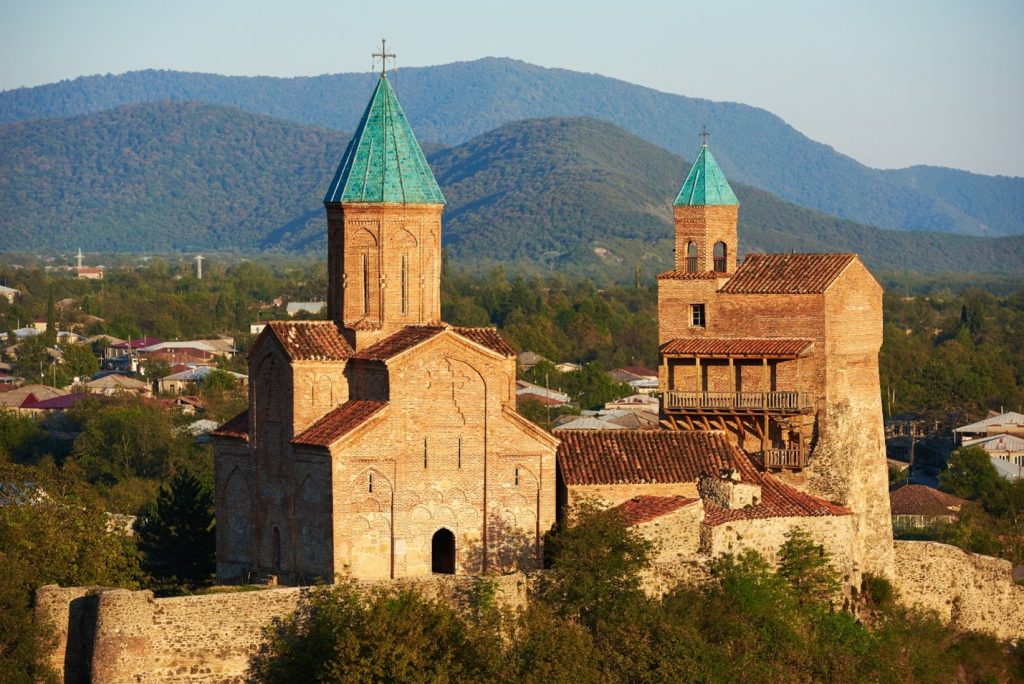
The Gremi Architectural Complex stands quiet among Kakheti’s vineyards, its church tower rising above the valley like a watchful sentinel. Once the capital of a 16th-century kingdom, it now tells its story through weathered stones, fortress walls, and faded frescoes. The air here is still, and history feels close — settled gently into the hills.
Telavi region (Kakheti)
The Telavi region lies at the heart of Kakheti, Georgia’s celebrated wine country. Rolling vineyards stretch toward the Caucasus Mountains, where age-old traditions meet generous hospitality. Here, families still bake bread in clay ovens and craft wine in buried clay jars called qvevri. It’s a place of earthy flavors, warm welcomes, and a deep, living heritage.
Alaverdi Cathedral (11th century monastery)
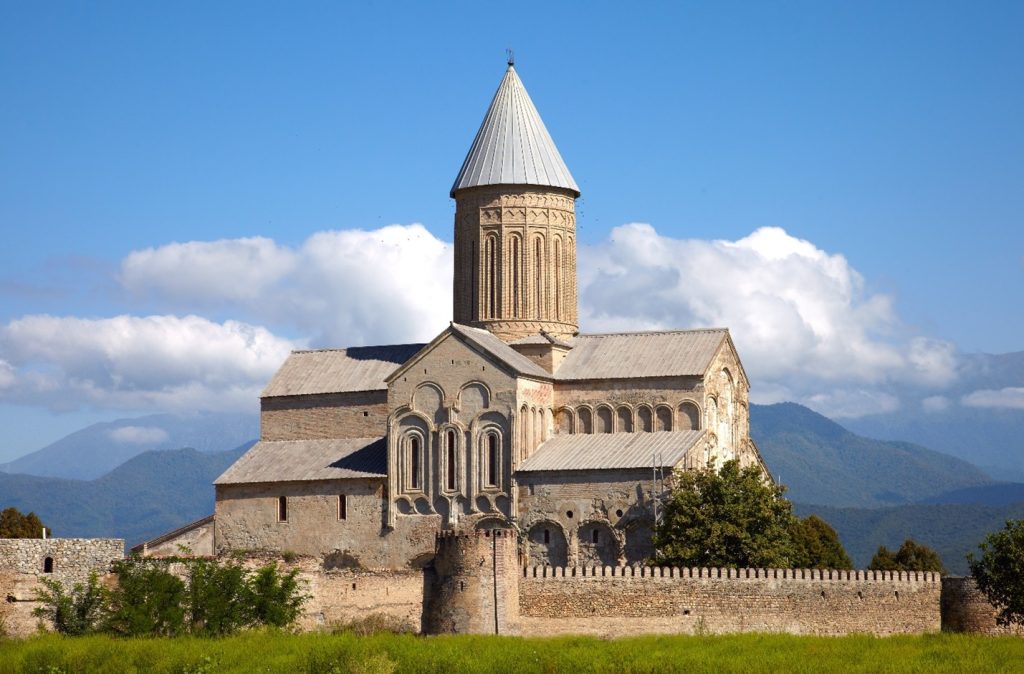
Alaverdi Cathedral rises solemnly in the heart of Kakheti’s wine country, framed by vineyards and distant peaks. Built in the 11th century, its stone walls hold centuries of prayer and resilience. The quiet grounds and simple beauty invite stillness, offering a glimpse into Georgia’s deep spiritual roots.
Tsinandali Garden and Museum (estate of a 19th-century Georgian Duke)
Tsinandali is a graceful estate once home to a 19th-century Georgian duke and poet. Its shaded gardens, vine-covered terraces, and historic wine cellar tell stories of elegance, art, and quiet nobility. Inside the house-museum, time slows — echoing with music, letters, and the scent of old books and blooming roses.
Sighnaghi
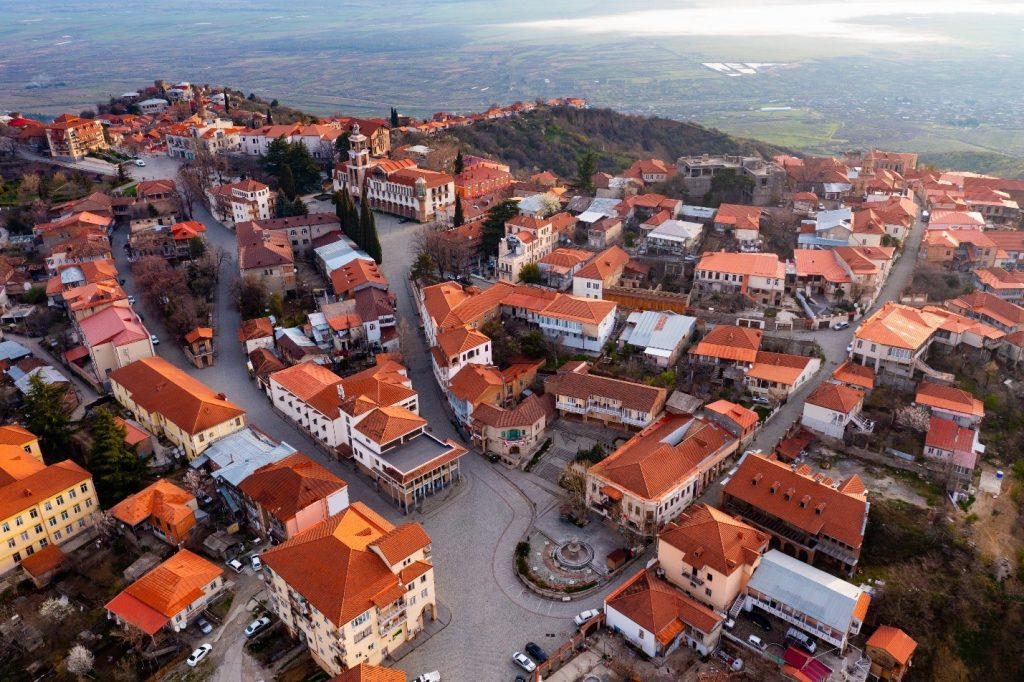
Sighnaghi is a hilltop town wrapped in stone walls and timeless charm. Known as the “city of love,” it overlooks the Alazani Valley with sweeping views of the Caucasus Mountains. Cobblestone streets, wooden balconies, and art-filled corners make it one of Georgia’s most romantic and peaceful places. It’s a gentle blend of history, wine, and warm southern sunlight.
Fortified hill town
Sighnaghi is a fortified hill town with red-tiled roofs, winding alleys, and panoramic views of the Alazani Valley. Its ancient stone walls and watchtowers once guarded the region — today, they frame quiet strolls and soft sunsets. The town feels timeless, wrapped in light, wine, and whispers of old love stories.
Mtskheta
Mtskheta is the spiritual heart of Georgia — one of its oldest cities and a cradle of Christianity. Set where two rivers meet, it holds sacred landmarks like Jvari Church and Svetitskhoveli Cathedral, where legend says the Robe of Christ is buried. With its quiet lanes and timeless atmosphere, Mtskheta offers a peaceful window into Georgia’s soul.
Jvari Church (6th century)
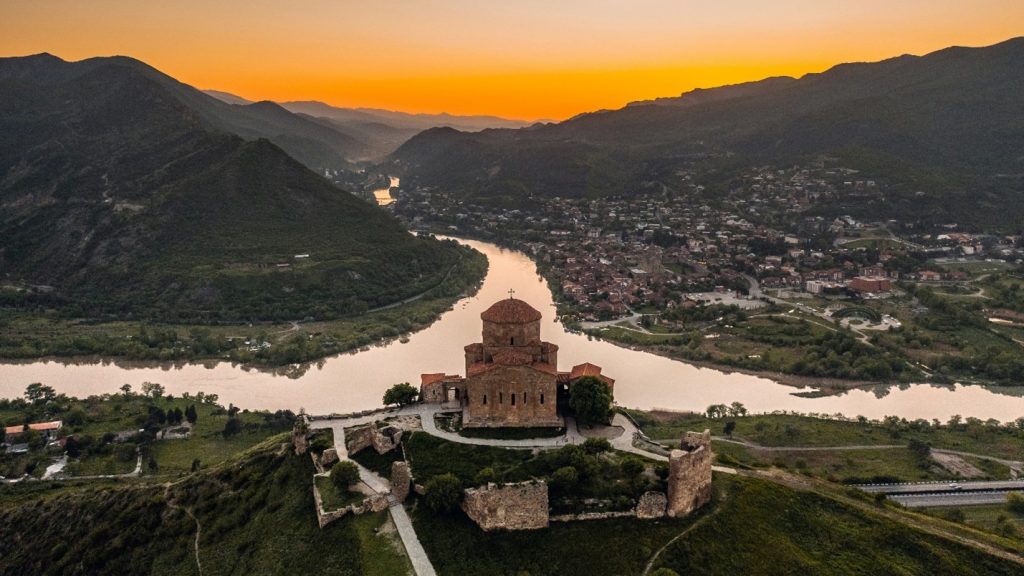
Jvari Church stands high on a rocky hill, where two rivers meet below. Built in the 6th century, it marks the place where Christianity first took root in Georgia. The view is vast and still, and the church itself — simple, solid, enduring — feels like a prayer carved in stone.
Svetitskhoveli Cathedral (11th century, UNESCO World Heritage Site)
Svetitskhoveli Cathedral rises in the heart of Mtskheta, its golden stone glowing in the sun. Built in the 11th century, it’s believed to hold the Robe of Christ beneath its floor — a sacred thread in Georgia’s spiritual history. Quiet and grand, it holds centuries of faith in every worn step and shadowed arch.
Gori
Gori sits in the wide plains of central Georgia, shaped by history and contrast. Known as the birthplace of Joseph Stalin, its museum preserves the memory of a complex past. Just outside town lies Uplistsikhe, an ancient cave city carved from rock — a silent witness to life along the Silk Road. In Gori, ancient roots and 20th-century legacy meet in one place.
Stalin Museum
Stalin Museum in Gori occupies the modest house where Joseph Stalin was born, offering a thoughtful glimpse into his early years and the Soviet era that followed. Preserved rooms, photographs, and personal belongings trace his journey from Georgian village boy to world leader. Beyond the house, exhibits include Stalin’s railway carriage and state gifts, reminding visitors of the complexities of his legacy. It’s a calm, reflective space that invites contemplation on history’s shadows and echoes.
Uplistsikhe Cave Town (1st millennium BC, Silk Road site)
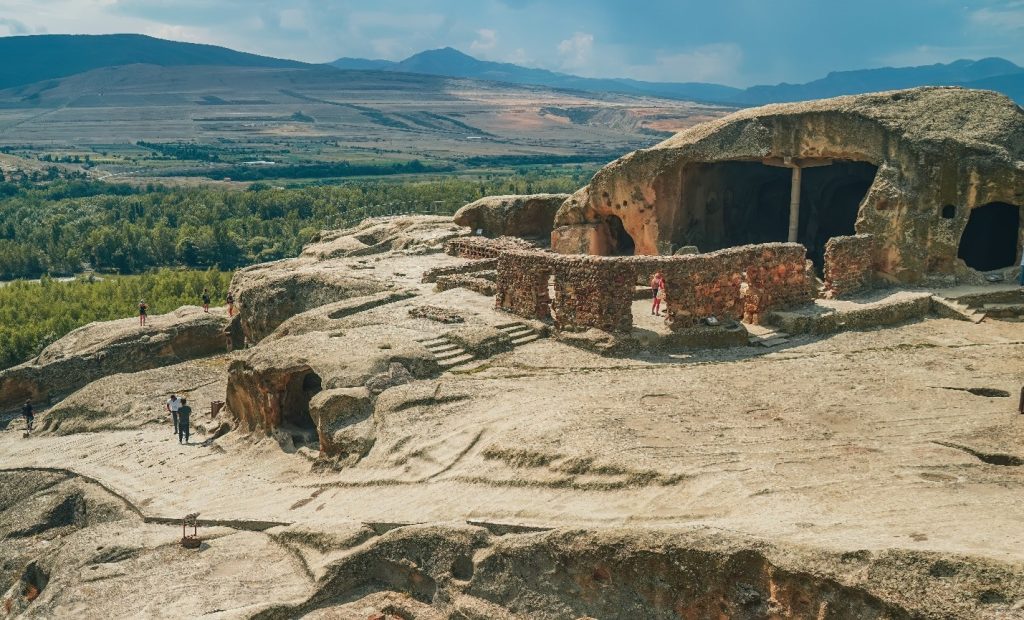
Uplistsikhe is a silent city carved into cliffs, where traders once passed along the Silk Road. Dating back to the 1st millennium BC, its rock-hewn halls, tunnels, and temples still echo with ancient footsteps. The wind moves softly through empty chambers, and the view over the valley feels timeless — a forgotten world touched by sun and stone.
Ananuri
Ananuri is a striking fortress overlooking the turquoise waters of the Jinvali Reservoir, along the Georgian Military Highway. Surrounded by forested hills, its stone towers and ornate churches once guarded the trade route through the Caucasus. Today, it’s a peaceful stop where history, nature, and architecture come together in quiet harmony.
Ananuri Fortress (on Jinvali Reservoir)
Ananuri Fortress stands above the turquoise waters of the Jinvali Reservoir, its towers reflected in the stillness below. Once a stronghold on the Georgian Military Road, it blends defense with beauty — arched churches, carved stonework, and views that stretch into forested hills. Time here feels paused between strength and serenity.
Kazbegi (Stepantsminda)
Kazbegi, now called Stepantsminda, rests in the shadow of one of the Caucasus’s highest peaks. Here, the Gergeti Trinity Church stands alone on a hilltop, framed by snow-capped mountains and open sky — a view that feels almost sacred. The air is fresh, the valleys wide, and the rhythm of life slow and steady. It’s a place where nature and spirit meet in silence and awe.
Gergeti Trinity Church (7100 ft above sea level)

Gergeti Trinity Church crowns a lonely hill beneath the towering peak of Mount Kazbegi. At 7,100 feet above sea level, it feels close to the sky — remote, silent, and sacred. The hike up winds through green valleys and open air, and at the top, the view takes your breath more than the climb. It’s a place where spirit and nature meet in quiet majesty.
View of Mt. Kazbegi (5054 m / 16,500 ft), weather permitting
Mount Kazbegi towers majestically over the region, its snow-covered peak reaching 5,054 meters (16,500 feet). On clear days, the mountain’s rugged beauty fills the sky, offering a breathtaking sight that captures the wild spirit of the Caucasus. Its presence inspires awe and a deep connection to Georgia’s natural grandeur.
Tbilisi
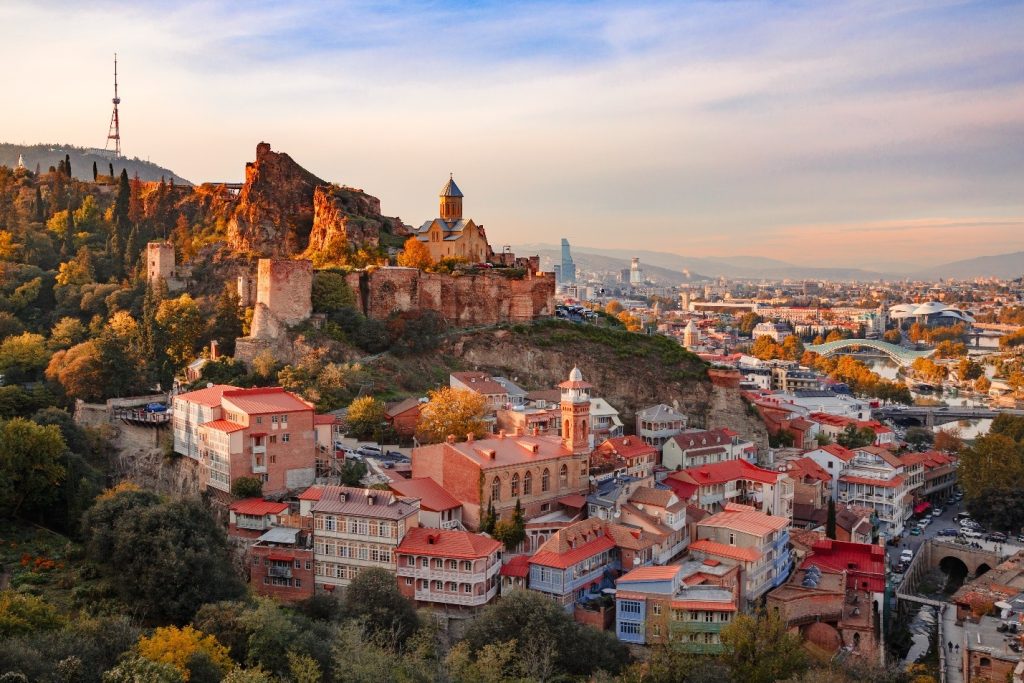
Tbilisi is Georgia’s lively capital — a city of warm light, winding streets, and deep contrasts. In the Old Town, pastel balconies lean over cobbled lanes, while sulfur baths steam quietly below ancient fortresses. Churches, mosques, and synagogues stand side by side, reflecting centuries of coexistence. With its href=”https://mafost.com/tag/creativity/” target=”_blank” rel=”noopener”>blend of tradition and creativity, Tbilisi welcomes with charm, energy, and a sense of timelessness.
19th-century wooden-balcony houses
Tbilisi’s 19th-century wooden-balcony houses are like open-air poems. Their colorful facades lean gently over winding streets, with carved railings and sun-warmed shutters. Each balcony feels lived-in and loved, holding the stories of generations in every creak and curve. They give the city its soft, romantic soul.
Georgian History Museum
The Georgian History Museum, housed in a charming old caravanserai (the Ioseb Grishashvili Museum) on Sioni Street, is a vivid journey through Tbilisi’s soul. Inside, over 50,000 artifacts span from Bronze Age tools and traditional costumes to photographs, dioramas of 19th-century shops and teahouses, and musical instruments. Beneath the floors lies a hidden Wine Museum in the ancient cellars, celebrating Georgia’s 8,000-year-old winemaking tradition with clay jars, tastings, and historical exhibits. This museum offers a calm, immersive glimpse into the everyday life, crafts, and culture that have shaped Tbilisi across centuries.
Rustaveli Avenue
Rustaveli Avenue is the grand heart of Tbilisi — a wide, tree-lined street where old-world charm meets modern rhythm. Along its path, you’ll find opera houses, theaters, cafés, and bookshops, all set against elegant 19th-century facades. It’s where daily life unfolds with a mix of culture, conversation, and Georgian spirit.