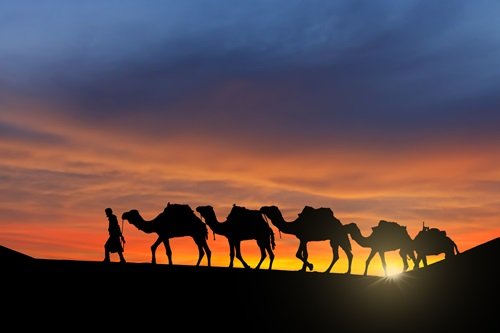
Beyond simply being a well-known trade route, the Silk Road cultural exchange represents global connections, culture, and history. This fabled network of routes, which spanned Central Asia and the Caucasus, connected East and West for centuries, enabling the exchange of ideas, technology, and culture in addition to goods.
Origins of the Silk Road and Its Cultural Impact
During China’s Han Dynasty in the second century BCE, the Silk Road started to take shape. It flourished until about the seventeenth century CE, when maritime trade started to take over. The vast landscapes of Kazakhstan, Uzbekistan, Kyrgyzstan, Turkmenistan, Tajikistan, Azerbaijan, Armenia, and Georgia were traversed by traders, explorers, and tourists along this route.
Trade Beyond Goods: The Silk Road’s Role in Cultural Exchange
Along the Silk Road, goods of all kinds were transported. East and West met in a thriving marketplace where horses, wool, glassware, perfumes, silk, spices, precious metals, tea, and ceramics were exchanged. However, trade was more than just the exchange of goods; one of the first banking and financial systems was established along this route. Bills of exchange and letters of credit were used by merchants to securely move money over thousands of miles.
How the Silk Road Shaped Religion, Art, and Cuisine
A remarkable exchange of cultures was also made possible by the Silk Road. Alongside traders, religions, art, literature, and scientific knowledge spread throughout Central Asia and the Caucasus, leaving a legacy that is still evident in local customs, architecture, and cuisine.
Interesting Facts About the Silk Road:
- Although the route itself existed for more than a millennium, the term “Silk Road” was first used in the 19th century by a German geographer.
- This route was used for the transportation of many other luxury goods in addition to silk, such as gold, jade, paper, and even exotic animals.
- Every 30 to 40 kilometers, caravanserais—roadside lodgings for travelers and traders—were constructed to offer food, shelter, and security.
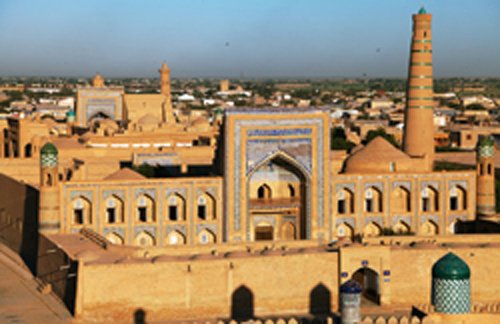
- Samarkand, Bukhara, Tashkent, and other well-known Silk Road cities were intellectual and cultural centers that drew academics, poets, and artists.
- Noodles, spices, and fruits like pomegranates and apricots made their way from Asia to Europe as a result of the Silk Road.
- Beyond commerce, the Silk Road contributed to the transcontinental spread of religions like Buddhism, Islam, and Christianity.
- See More: 7 Things You Didn’t Know About Central Asia
Why the Silk Road Still Matters Today
Travelers can discover historic cities, vibrant bazaars, and ancient caravanserais that once connected the world by following in the footsteps of the Silk Road. Every location, from the mountains of Georgia to the deserts of Turkmenistan, tells a tale of human ingenuity, trade, and culture that shaped civilizations for more than a millennium.
Traveling to these nations is more than just sightseeing; it’s taking a step back in time along the path that once connected cultures and continents in an amazing exchange of goods, ideas, and aspirations.

Join Us on a 5 Stans Tour
Discover more from East Site Travel
Subscribe to get the latest posts sent to your email.