Already explored the Silk Road? Discover why Norway’s fjords, scenic trains, and expert-led tours are the ideal next adventure for 2026.
Summary of this Article
- From Uzbekistan’s caravanserais to Norway’s fjords — East Site Travel brings 20 years of Silk Road expertise to small-group Norway tours.
- The fjords demand your full attention — just like the Silk Road did. Discover why East Site’s Central Asia travelers are choosing Norway next in 2026.

From the Silk Road to the Fjords: Why Norway Tours Are the Perfect Next Step in 2026
There’s a particular kind of traveler who books a Silk Road tour.
They’re not looking for a resort. They’re not interested in being handed a laminated itinerary and pointed at a monument. They want depth—cultural immersion, expert guides who actually know the place, small groups that move at a human pace. They want to come home feeling like they’ve learned something, not just seen something.
If that describes how you traveled through Uzbekistan or along the ancient caravan routes of Central Asia, then Norway is not a departure from what you love about travel. It’s a continuation of it.
We’ve spent more than 20 years leading small-group tours through Kazakhstan, Kyrgyzstan, Uzbekistan, Tajikistan, and Turkmenistan. In 2026, we’re bringing that same philosophy—expert-led, comfort-forward, never more than 15 guests—to the fjords of Norway. Here’s why so many of our Silk Road travelers are choosing Norway as their next destination. If you’re earlier in your Central Asia research, our Silk Road first-timer’s guide to Uzbekistan is a good place to start.
Why Many Silk Road Travelers Choose Norway Next
It’s not an obvious pairing on a map. Central Asia and Norway share no geography, no language, no historical overlap. What they share is something harder to name: a quality of landscape that makes you feel genuinely far from the ordinary world.
The Silk Road traveler who stood in the Fergana Valley watching the light change over mud-brick minarets, or who crossed a high Pamir plateau in a small van with a guide who had done it a hundred times—that traveler already knows what it feels like to be somewhere that demands your full attention.
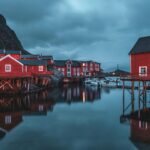
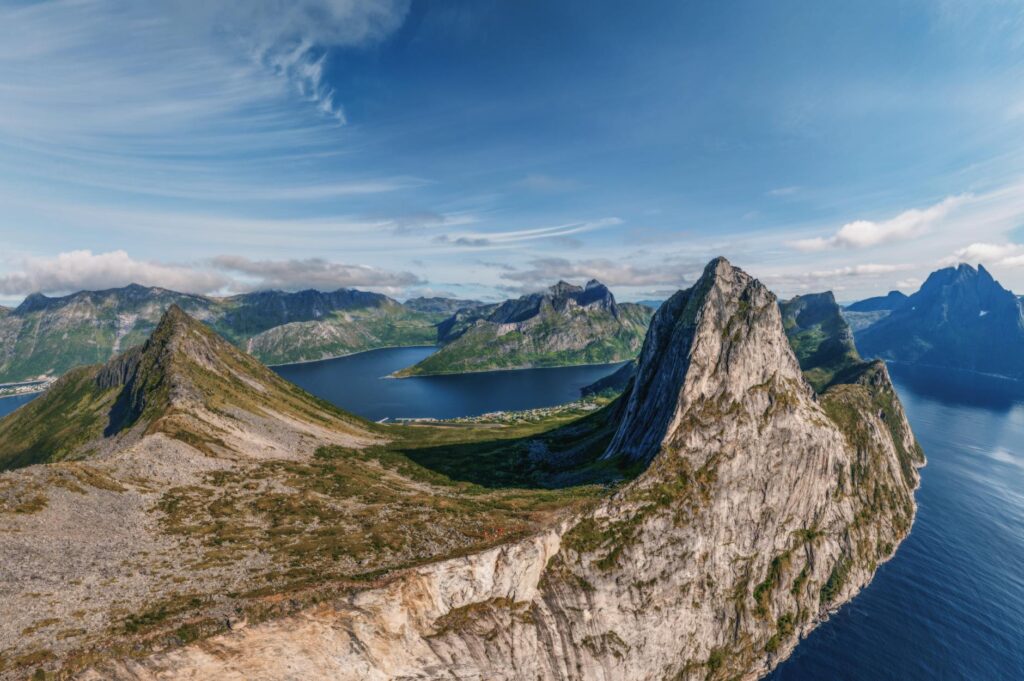
Norway demands the same thing. The fjords are not decorative. They are geological events—walls of rock dropping thousands of feet into water so still it reflects the sky like a mirror.
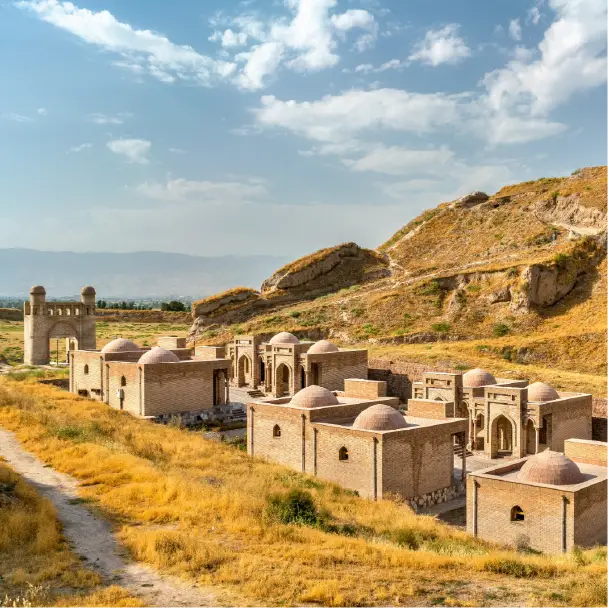
The silence in a Norwegian valley is the same quality of silence as the Kyzylkum Desert at dawn. The scale is different. The feeling is related.
There’s also a practical continuity. Travelers who have done the Silk Road with us—or who have used our Central Asia after retirement guide to plan a first trip—already understand what a well-run small-group tour feels like. They know the difference between a guide who recites facts and one who interprets a place. They know how much a maximum of 15 guests changes the texture of a trip. They’re not starting from scratch. They’re choosing a next chapter.
What Makes Norway a Perfect Fit for East Site Travelers
Our guests are not thrill-seekers. They’re not testing themselves against a destination. They’re looking for the kind of travel that gives them something to carry home—a conversation, a view, an understanding of a place that a guidebook can’t provide.
Norway is exceptionally well-suited to this.
Comfort-forward accommodations
The boutique hotel and small lodge sector in Norway is excellent. Fjordside properties offer the kind of setting—water at the window, mountains above, near-silence after dinner—that our Silk Road guests have found in caravanserai-turned-hotels in Bukhara or yurt camps in the Kyrgyz mountains. The aesthetic is entirely different. The quality of presence is the same.
Scenic trains and fjord cruises instead of strenuous hiking
One of the most persistent myths about Norway is that it’s a destination for serious hikers. It isn’t—or rather, it doesn’t have to be.
The Bergen Railway is one of the most beautiful train journeys in Europe. A fjord ferry between Flam and Gudvangen covers terrain that would take days to hike, in two unhurried hours from a comfortable deck. The Geirangerfjord is accessible by boat. The best views in Norway are not at the top of a trail—they’re at water level, from a vessel moving slowly through water that has no bottom you can see.
Our Silk Road tours are built around vehicles and guides, not physical endurance. Our Norway tours are built the same way.
No crowds, no rush
The cruise ships dock in Flam and Geiranger and Bergen. They don’t go to the Lusterfjord or the smaller hamlets along the Hardangerfjord. A group of 15 with a private ferry charter goes where a group of 50 cannot.
This is the same principle that takes our Central Asia groups to villages along the old Silk Road that mass-market tours skip entirely. The destination changes. The philosophy doesn’t.
Norway’s Most Iconic Fjord Experiences
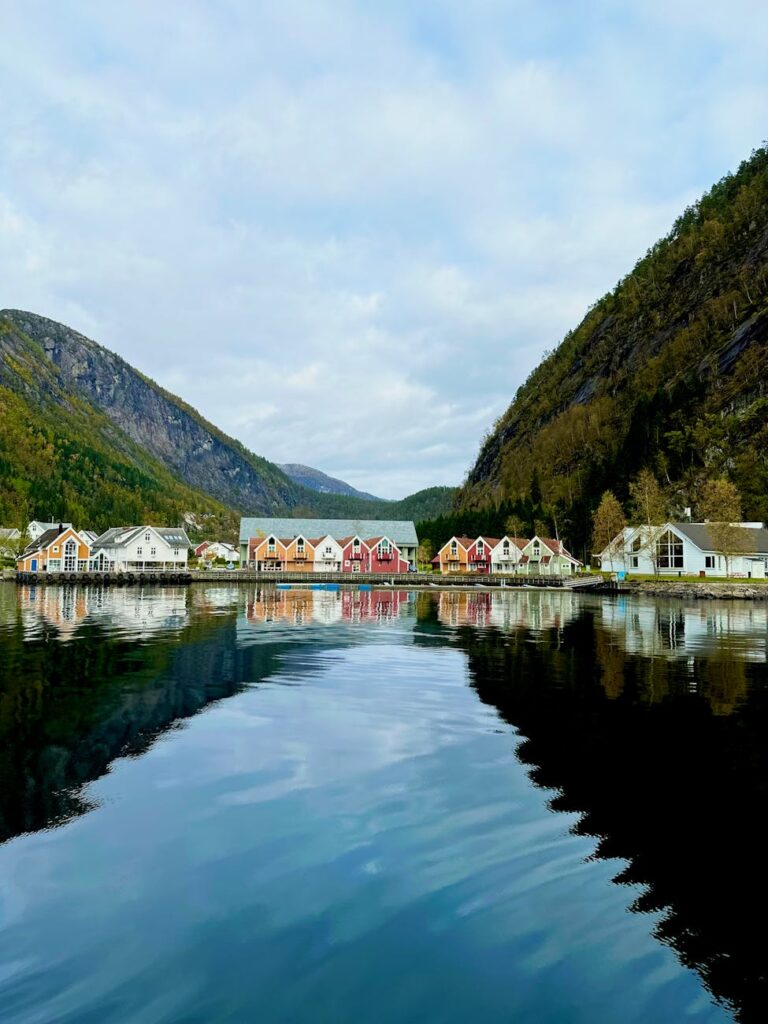
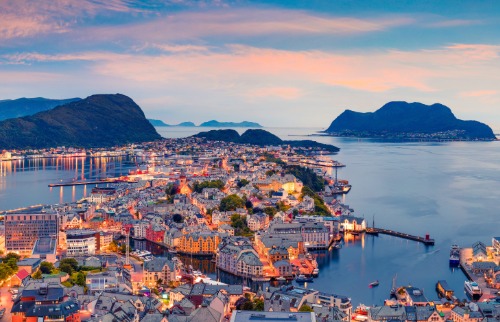
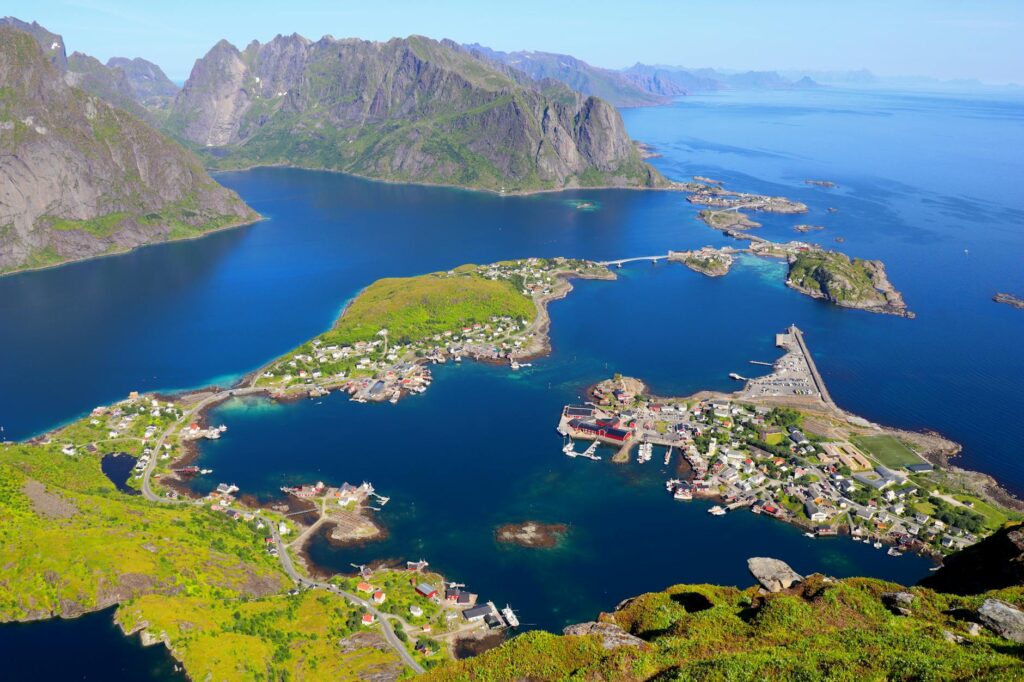
For the first-time Norway traveler, it helps to understand the scale of what the fjord system actually is. Norway has more than 1,000 fjords. The ones that appear most often in photographs are exceptional—but they are not the whole picture.
Geirangerfjord
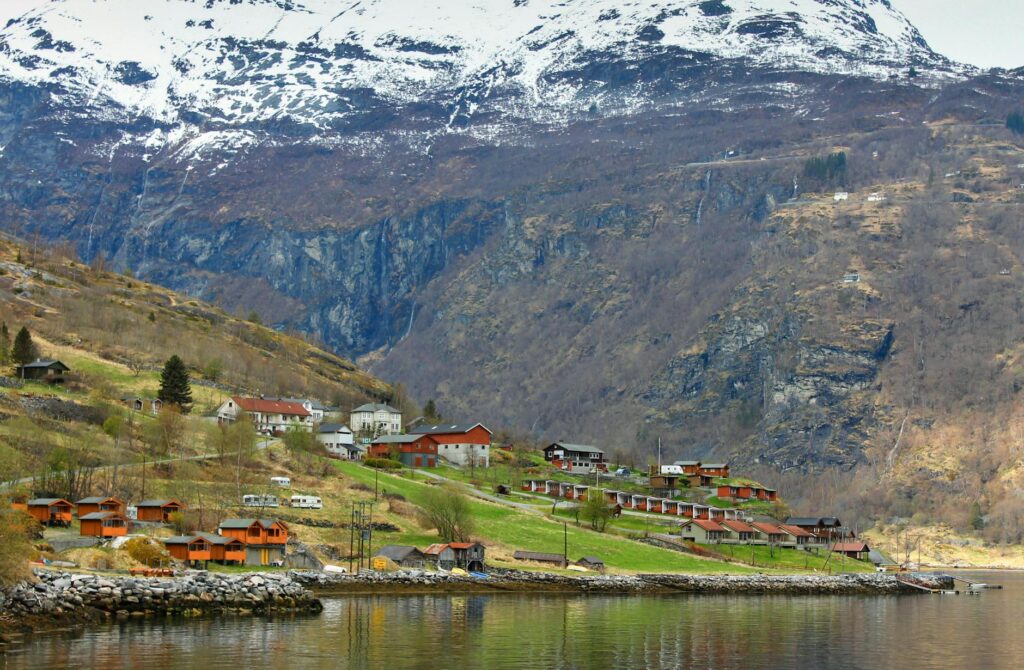
UNESCO-listed and genuinely dramatic—waterfalls called the Seven Sisters and the Suitor drop directly into the water. This is a place that earns its reputation. The challenge is that the cruise ships know it. We visit in ways that minimize the overlap: early departures, smaller vessels, time in the valley villages rather than the main dock.
Sognefjord
The longest fjord in Norway—and the deepest in the world. Its scale is difficult to comprehend until you’re on the water. The Sognefjord branches into smaller arms, including the Nærøyfjord (also UNESCO-listed), where the walls narrow to 250 meters and the sky becomes a ribbon above you. This is not a place that rushes.
Hardangerfjord
Known as the “queen of the fjords” and, in spring, famous for its fruit blossoms—apple and cherry orchards lining the water’s edge in white and pink. Quieter than Geiranger, less trafficked, and for many travelers the most emotionally affecting. The Hardangerfjord is also where some of our favorite small village stays are located.
How Norway Tours Mirror the Best Parts of Your Silk Road Experience
We’ve thought carefully about what our long-term guests value most in the trips they’ve taken with us. These are the qualities they name most often—and they map directly onto what we’ve built into our Norway program.
The same warmth of authority
Our Central Asia guides carry 10, 15, 20 years of relationship with the places they show you. They know the family that runs the best plov restaurant in Samarkand. They know which border crossing is fastest on a Tuesday. That depth of local knowledge is not something you can outsource or automate.
Our Norway guides carry the same thing. They know the fjord ferry captain who will slow the boat at a particular bend because the light is right. They know the village in the Hardanger that serves a lunch worth planning the whole day around. This is the difference between a guide and a narrator.
Immersive pacing
The Silk Road cannot be rushed. The distances are real, the border crossings unpredictable, the best experiences require time to unfold. We learned early that an itinerary built around maximizing destinations produces travelers who feel like they’ve seen a lot and experienced very little.
Norway rewards the same patience. Two nights in a fjord village is worth more than one night each in three. A morning with no agenda—a walk, a coffee, a ferry watched from the dock—often becomes the memory that defines the trip.
Small groups that travel as a group
One of the things guests tell us most often after a Silk Road tour is that they didn’t expect to enjoy the other people as much as they did. Fifteen is the right number for this. Large enough that there’s always good conversation at dinner; small enough that the group develops a genuine shared experience rather than fragmenting into cliques.
Sample 8–10 Day Norway Itinerary
This is a representative structure for our Norway departures. The specific villages, ferry routes, and hotel properties vary by season and availability—but the pacing and philosophy remain consistent.
- Day 1: Arrive Oslo. Private transfer to the hotel. Evening at leisure in the city center—Aker Brygge waterfront, a quiet dinner.
- Day 2: Oslo. Viking Ship Museum, the Fram Museum, a walk through the Grünerløkka neighborhood. The city is compact and manageable.
- Day 3: Train to Bergen. The Oslo–Bergen line crosses the Hardangervidda plateau—one of the great rail journeys in Europe. Arrive Bergen mid-afternoon.
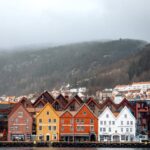
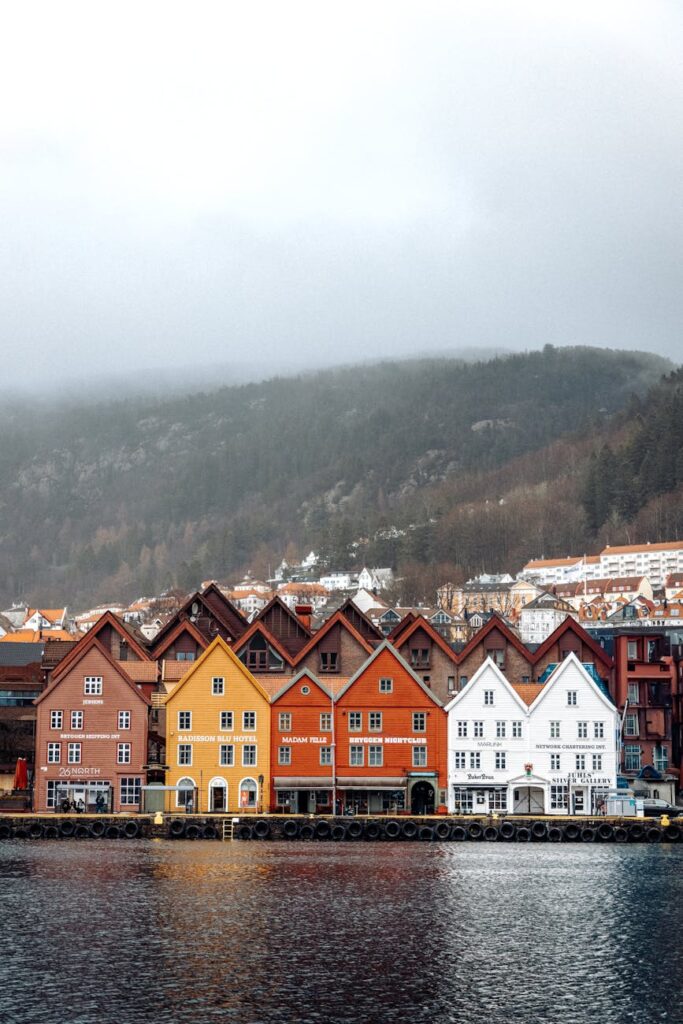
- Days 4–5: Bergen and Fjord Day Trips. Brüggen, the Fløyen funicular, and a full-day fjord excursion to a village on the Hardangerfjord or Sognefjord. Private ferry. Lunch on the water.
- Day 6: Bergen Railway to Flåm. Five hours of mountain scenery. Overnight in the valley.
- Day 7: Nærøyfjord by Boat. The narrowest branch of the Sognefjord. Walls of rock on either side, waterfalls, silence. Return to Flåm.
- Day 8: Geirangerfjord. Private vessel, early departure to avoid cruise ship arrival. The Seven Sisters in the morning light.
- Days 9–10: Return to Oslo, Departure. Scenic drive or train. Final evening dinner together. Transfer to Oslo Airport on Day 10.
When to Visit Norway in 2026
Season shapes the Norway experience more than almost any other destination we operate in. The same fjord looks and feels entirely different in June than in January.
Late May through September: the primary season
This is when the fjords are fully accessible, the hiking trails are open, the ferry schedules are at full frequency, and the days are long—in June and July, extraordinarily so. The Midnight Sun in northern Norway is an experience that resists description: 24 hours of daylight that quietly reorganizes your sense of time.
June and early July are peak season, with the fullest daylight and the warmest temperatures. Late July and August see the most domestic tourists. September is our personal recommendation for first-timers: the summer crowds have thinned, the light has turned golden, and the fjords are still fully navigable.
November through March: Northern Lights season
A different Norway entirely. Dark, cold, and for the right traveler, deeply compelling. The Aurora Borealis is visible from northern Norway on clear nights between late September and late March—but the peak window for reliable sightings is December through February.
Winter Norway requires a different kind of tour design: dog sledding, ice hotels, Sami cultural experiences, and the particular beauty of a fjord valley under snow. We offer winter departures for guests who specifically want this experience. It is not interchangeable with the summer program—it’s a different trip.
New to Scandinavia? Start Here.
Norway is one part of a broader Scandinavian expansion we’re rolling out in 2026. If you’re exploring what a first Scandinavia trip might look like—whether Norway alone or combined with Sweden and Denmark—these resources will help. Our Scandinavia first-timer’s guide covers pacing, seasons, and how to approach the region as a whole. And if you’re ready to look at how a small-group tour from the USA actually works in practice, our Scandinavia small group tours page walks through exactly what’s included, how the logistics work, and what makes our approach different from the mass-market alternatives.
The Same Philosophy. A New Landscape.
When we started leading tours through Central Asia, the region was genuinely unknown to most American travelers. There were no well-worn itineraries. No infrastructure built for tourism. We built our expertise from the ground up—local guides, relationships with family-run guesthouses, border crossing knowledge, visa logistics—because we believed the Silk Road was worth the effort.
Norway is not Central Asia. It’s safer, more accessible, more immediately comfortable. But it rewards the same kind of traveler: someone who wants to be in a place, not just pass through it. Someone who values a guide who can explain why a fjord formed the way it did, what a medieval stave church reveals about the people who built it, why the Norwegians developed the concept of friluftsliv and what it means to travel with that philosophy rather than against it.
If you’ve traveled the Silk Road with us—or if you’ve been thinking about it for years—we think Norway is the right next step. We’d love to show you what we’ve designed for 2026.
→ Join the first 2026 Norway departures
INTERNAL LINKING TARGETS (for CMS): /central-asia-tours/ | /tours/ | /norway-tours/ (future) | /scandinavia-small-group-tours/ | /scandinavia-first-timers-guide/ | /central-asia-after-retirement-seniors-guide/ | /silk-road-first-timers-why-uzbekistan/
Discover more from East Site Travel
Subscribe to get the latest posts sent to your email.