Norway is one of the most rewarding destinations in the world—and one of the easiest to navigate, once you know a few key things. From its strikingly efficient public transport system to a culture that runs almost entirely without cash, the country is built for confident travel. But its dramatic landscapes and rapidly shifting weather mean that a little preparation goes a long way.
This guide covers everything a first-time visitor needs to know before arriving: how to get around, how to manage costs, what to pack, and how to respect the culture that makes Norway so extraordinary. Think of it as the logistical companion to your adventure—the practical layer beneath the awe.
Getting Around Norway: Public Transport Is Your Best Friend
Norway’s public transport network is a point of national pride. The rail, ferry, and bus systems are clean, punctual, and deeply integrated—making it entirely possible to explore the country without a rental car.

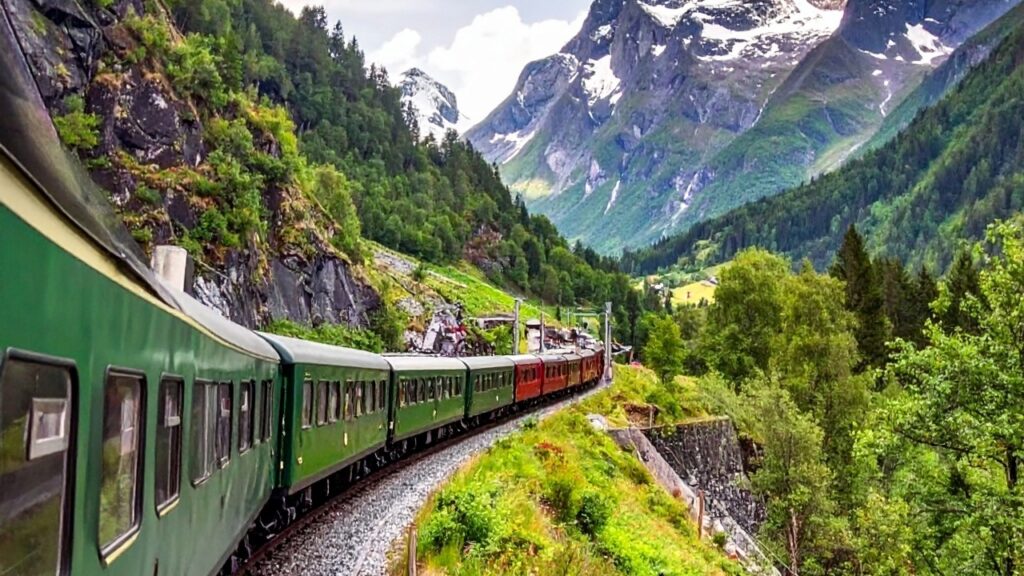
Trains: Scenic Routes That Are Worth the Journey
The Vy rail network connects Oslo to Bergen, Trondheim, Stavanger, and beyond. Book in advance on vy.no to secure the best fares—peak summer seats on the Bergen Line sell out weeks ahead.
- The Bergen Line (Oslo–Bergen) is one of the most scenic rail journeys in Europe, crossing the Hardangervidda plateau at 1,200 meters.
- The Flåm Railway branches off the Bergen Line and descends 864 meters through waterfalls and gorges—often called the world’s most beautiful train journey.
- Rail passes (Eurail) are accepted, but for Norway-only travel, point-to-point tickets are often cheaper.
Ferries: The Floating Highways of the Coast
Norway’s coastline is so broken by fjords that ferries are not a tourist attraction—they are an essential part of daily infrastructure. Many car ferries run continuously and simply require you to drive on.
- The Hurtigruten coastal steamer runs from Bergen to Kirkenes (near the Russian border), stopping at 34 ports. It’s part cargo ship, part expedition cruise, and entirely Norwegian.
- For fjord-hopping without a car, the Norway in a Nutshell package (oslo.no) combines the Bergen Line, the Flåm Railway, a fjord ferry, and a bus into a single seamless route.
- Ferry schedules in rural areas can be infrequent—always check Ruter.no or Entur.no before planning a tight connection.
Buses: Filling the Gaps Between Rail and Ferry
Long-distance buses (NOR-WAY Bussekspress) connect towns the rail doesn’t reach. For city travel, Oslo’s T-bane (metro), trams, and buses are all covered by the same Ruter ticket—a single 24-hour pass covers the entire zone.
Going Cashless: How Norway Pays (And How You Should Too)
Norway is one of the most cashless societies on Earth. In many restaurants, taxis, and even some market stalls, cash is actively discouraged or outright unavailable. As a first-time visitor, the sooner you embrace this, the more smoothly your trip will run.
- Visa and Mastercard are accepted virtually everywhere. American Express has slightly less coverage in rural areas.
- Notify your bank before you travel to avoid fraud blocks on international transactions.
- ATMs (Minibanks) are available in all cities and most towns if you need cash for a farmers’ market or a rural hut stay.
- Vipps, Norway’s dominant mobile payment app, is used widely among locals but requires a Norwegian phone number—it’s not practical for tourists.
- Apple Pay and Google Pay work at most terminals that accept contactless card payments.
Budget Tip: Norway is expensive by almost any measure. A restaurant dinner typically costs 300–600 NOK (roughly $28–$56 USD) per person. Grocery stores like Rema 1000, KIWI, and Coop are the savvy traveler’s best friends—the quality is excellent, and you can assemble a genuinely great picnic for a fraction of restaurant prices.
3. Packing for Norway’s Unpredictable Weather
The single most important thing to understand about Norwegian weather: it changes fast and varies enormously by region. Bergen is one of the rainiest cities in Europe. The Arctic North can be bitterly cold even in June. A summer hike on Trolltunga can begin in sunshine and end in sleet.
The Norwegian approach is simple: dress in layers, always carry a waterproof shell, and never trust a clear sky. This philosophy—an extension of the national concept of friluftsliv (outdoor life)—means Norwegians go out regardless of the forecast. You should too, as long as you’re prepared.
The Three-Layer System (Non-Negotiable)
- Base Layer: Merino wool or moisture-wicking synthetic. Merino is preferred because it regulates temperature, resists odor, and can be worn multiple days—ideal for multi-day fjord hikes.
- Mid Layer: A fleece or lightweight down jacket. This is your warmth engine.
- Outer Layer: A waterproof and wind-resistant shell jacket. Not water-resistant—waterproof. The fjord climate produces horizontal rain.
By Season: What to Prioritize
- Summer (June–August): Light layers, waterproof jacket, sturdy hiking boots with ankle support, sunglasses. In the far north, pack a sleep mask—the Midnight Sun makes blackout curtains irrelevant.
- Autumn (September–October): Add a warmer mid-layer and hat. Trails get muddy—waterproof boots matter here.
- Winter (November–March): Thermal base layers, heavy insulated jacket, wool hat, gloves, and waterproof boots rated for sub-zero temperatures. Hand warmers are a small luxury worth packing.
- Spring (April–May): Highly variable. Prepare for everything from mild sunshine to late snowfall, especially in the mountains.
Other Packing Essentials
- Power adapter: Norway uses Type F (Schuko) outlets at 230V. Bring a universal adapter.
- Reusable water bottle: Norwegian tap water is among the purest in the world—drink it freely from any tap or mountain stream.
- Insect repellent: Essential in the Arctic summer (June–July), when mosquitoes near lakes and marshes can be intense.
- Downloadable offline maps: Coverage in rural fjord areas and the far north can be spotty. Download maps on maps.me or Google Maps before you leave towns.
4. Culture & Etiquette: Traveling Respectfully in Norway
Norwegians are warm, but they’re not immediately effusive. Understanding a few cultural dynamics will help you connect more authentically and avoid unintentional missteps.
- Respect the silence: Norwegians are comfortable with quiet. On public transport, keep conversations low and phone calls brief. Silence is not awkward—it’s a sign of mutual respect.
- Allemannsretten (Right to Roam): Norwegian law gives everyone the right to hike across open land, pitch a tent 150 meters from the nearest residence, and pick wild berries and mushrooms freely. Use this right—but leave no trace.
- Tipping: Not mandatory, but appreciated in restaurants (5–10% is generous). Tipping in taxis or cafes is unusual.
- Alcohol: Sold in government-run Vinmonopolet stores (wine and spirits) and supermarkets (beer only, before 8pm weekdays and 6pm Saturdays). Plan ahead in rural areas.
- English: Spoken fluently by nearly all Norwegians under 60. Do not worry about language barriers; worry about being interesting enough to start a conversation.
5. Safety, Health & Practical Logistics
Norway consistently ranks among the safest countries in the world. Petty crime is low, the healthcare system is excellent, and the infrastructure is reliable. A few practical notes:
Emergency Numbers
- 112 for police and emergencies.
- 113 for ambulance. The European standard 112 also works.
Hiking Safety
Always register your planned route on ut.no (the national outdoor recreation portal) before serious hikes like Trolltunga or Besseggen. Check trail conditions on the day of—some high routes remain closed until late June due to snow. Never hike famous trails alone without telling someone your plan.
Health & Insurance
EU/EEA visitors with a European Health Insurance Card (EHIC) receive subsidized care. Non-EU visitors (including US travelers) should carry comprehensive travel insurance that covers emergency medical evacuation—mountain rescue in Norway is excellent but can be costly without coverage.
The East Site Difference: Small-Group Pacing Through the Nordics
For over 20 years, East Site Travel has specialized in getting travelers into places most tours never reach—from the mountain passes of Tajikistan to the Silk Road cities of Uzbekistan. We bring that same philosophy to Norway: unhurried pacing, locally connected guides, and itineraries designed around genuine cultural immersion rather than box-checking.
If you’ve traveled with us through Central Asia, you already know what to expect: seamless logistics handled by people who know the terrain deeply, and evenings spent with genuine insights into a place rather than a generic dinner.
If Norway is your first journey with us, this guide is your starting point. The next step is seeing it in person.
Continue Exploring Norway
→ Back to Norway Destination Hub.
→ Top 12 Experiences in Norway
→ Norway Without a Car: How to Navigate the Country
→ Small-Group Scandinavia Tours
Discover more from East Site Travel
Subscribe to get the latest posts sent to your email.