Unveiling the Secrets of Samarkand Blue Tiles: A Masterclass in Silk Road Artistry.
Experience the breathtaking beauty of Samarkand’s blue tiles, where ancient craftsmanship meets spiritual symbolism.
In This Post
These mesmerizing blue tiles are more than just decoration; they represent a visual journey through Samarkand’s mesmerizing tiled architecture, showcasing centuries of cobalt-infused history. From the intricate geometric patterns of Registan Square to the vibrant “street of tombs” at Shah-i-Zinda, discover how this unique architectural brilliance continues to inspire travelers and photographers seeking the legendary “Pearl of the East.”
Table of Contents
Samarkand’s Blue Tiles: The Call to Wonder
There is a specific moment when you first arrive in Samarkand that stays with you forever. It’s usually when the desert sun hits a dome so brilliantly blue that it feels less like a building and more like a piece of the sky has settled onto the earth.
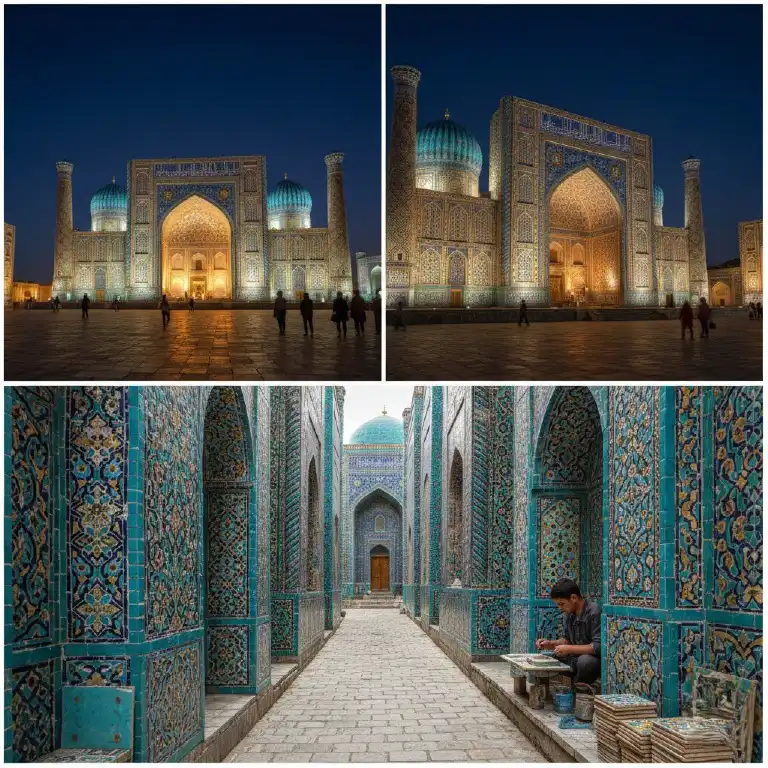
Samarkand is more than just a pin on a map; it is a visual masterpiece written in cobalt, lapis, and turquoise.
For the curious traveler,
These blue tiles are the physical heartbeat of the Silk Road, representing centuries of history, artistry, and cultural exchange.
In this visual exploration, we aren’t just looking at buildings—we are embarking on a journey of inspiration and discovery.
Whether you are a photographer, a history buff, or someone dreaming of their next great adventure, welcome to the “Pearl of the East”.
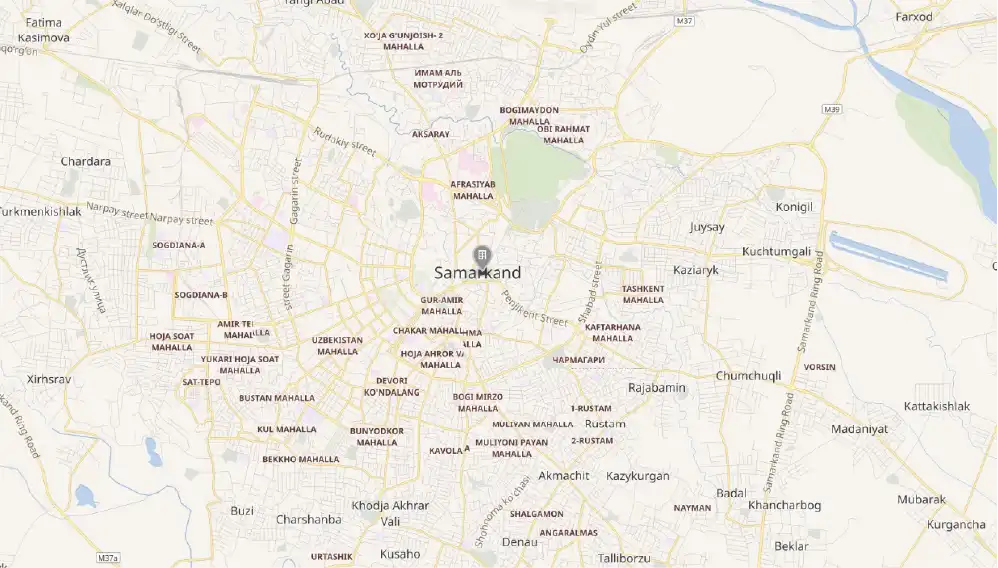
*Tap image of map to view full size.
The History Behind the Blue: Understanding Samarkand’s Most Iconic Color
Why blue? To understand Samarkand, you must understand the origin of its most iconic color.
What is the Symbolism of Blue?
In Central Asian tradition, blue was chosen for its deep symbolic meaning—representing the sky, water, and protection.
*Tap any image to view full screen.
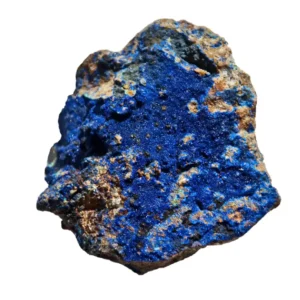
During the peak of the Silk Road, the availability of materials like cobalt from Persia and local lapis lazuli allowed artisans to develop a palette that was as durable as it was beautiful.
Why is the Timurid Empire known for blue tiles?
Under the Timurid Empire, this aesthetic became the gold standard for power and spirituality.
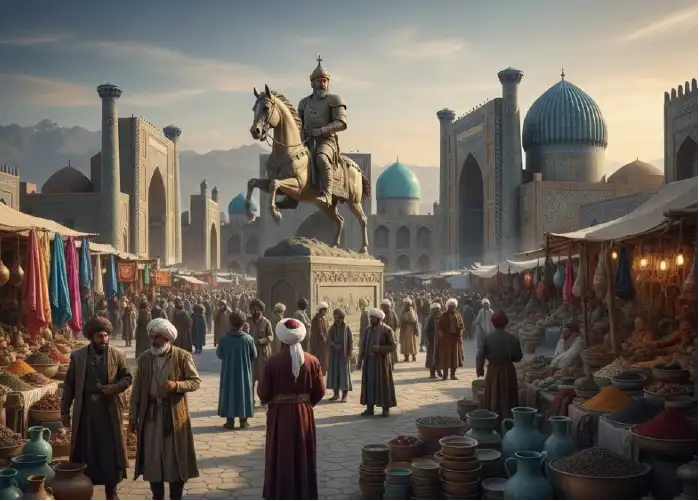
Samarkand became the epicenter of this style, where mathematics and art collided to create geometric patterns that seem to shift and change as you walk past them.
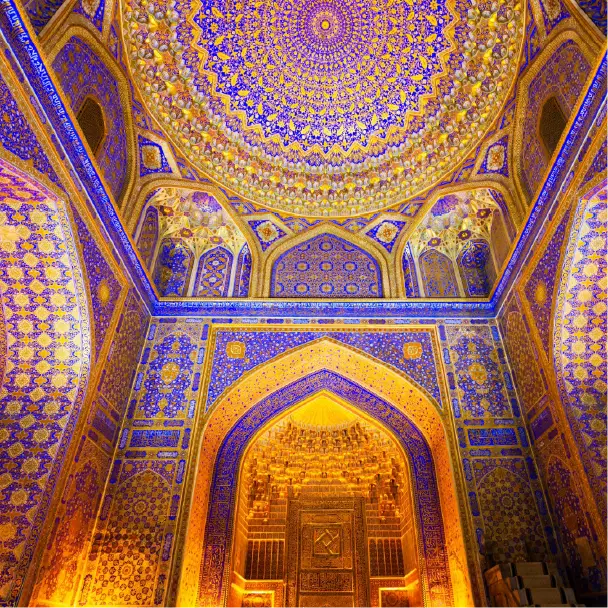
It was educational, spiritual, and deeply intentional—a way of making the divine tangible through architectural brilliance.
Registan Square: Where Blue Tiles Tell Ancient Stories
If Samarkand is the heart of Uzbekistan, Registan Square is its soul. Standing in the center of this square, you are surrounded by three massive madrasahs (Islamic schools): the Ulugh Beg, the Sher-Dor, and the Tilla-Kari.

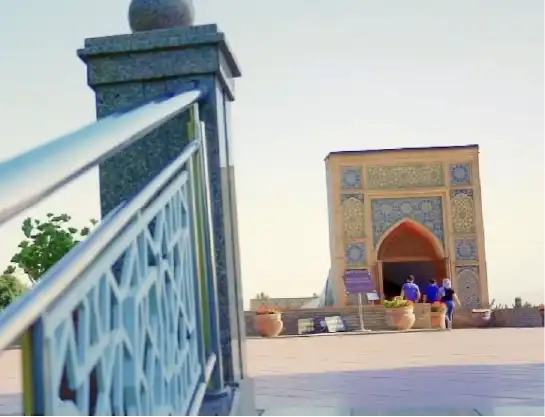
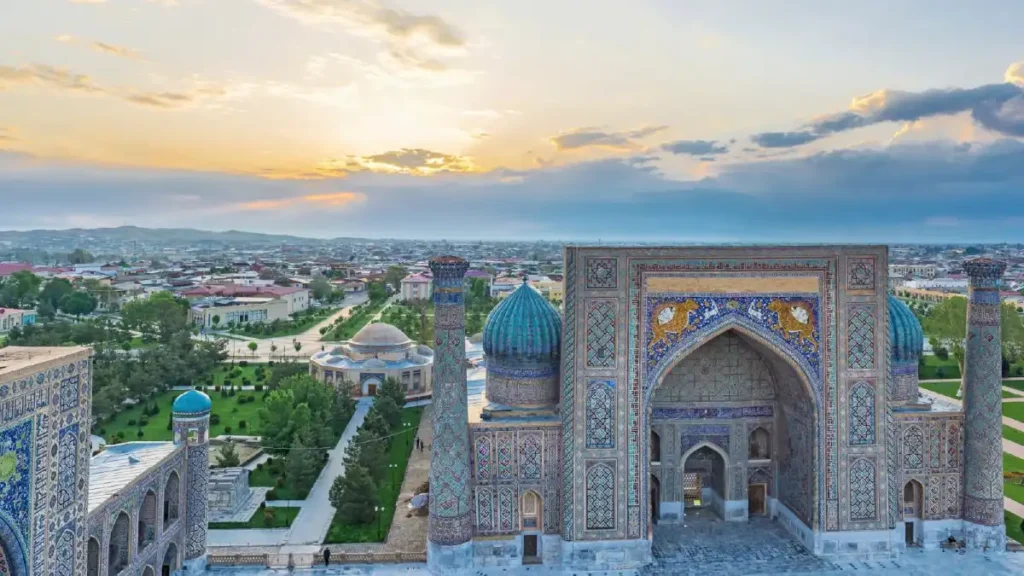
Look closely at the detail shots of the tilework. You’ll see thousands of individual mosaics forming perfect geometric stars and flowing calligraphic scripts. In the Sher-Dor Madrasah, you’ll even spot the “Lion-Sun” mosaics—a rare and beautiful departure from traditional Islamic art. The scale is immense, but the beauty is in the precision. At night, when the square is bathed in golden light, the blue tiles take on a deeper, more mysterious hue, transporting you back to the age of Tamerlane.
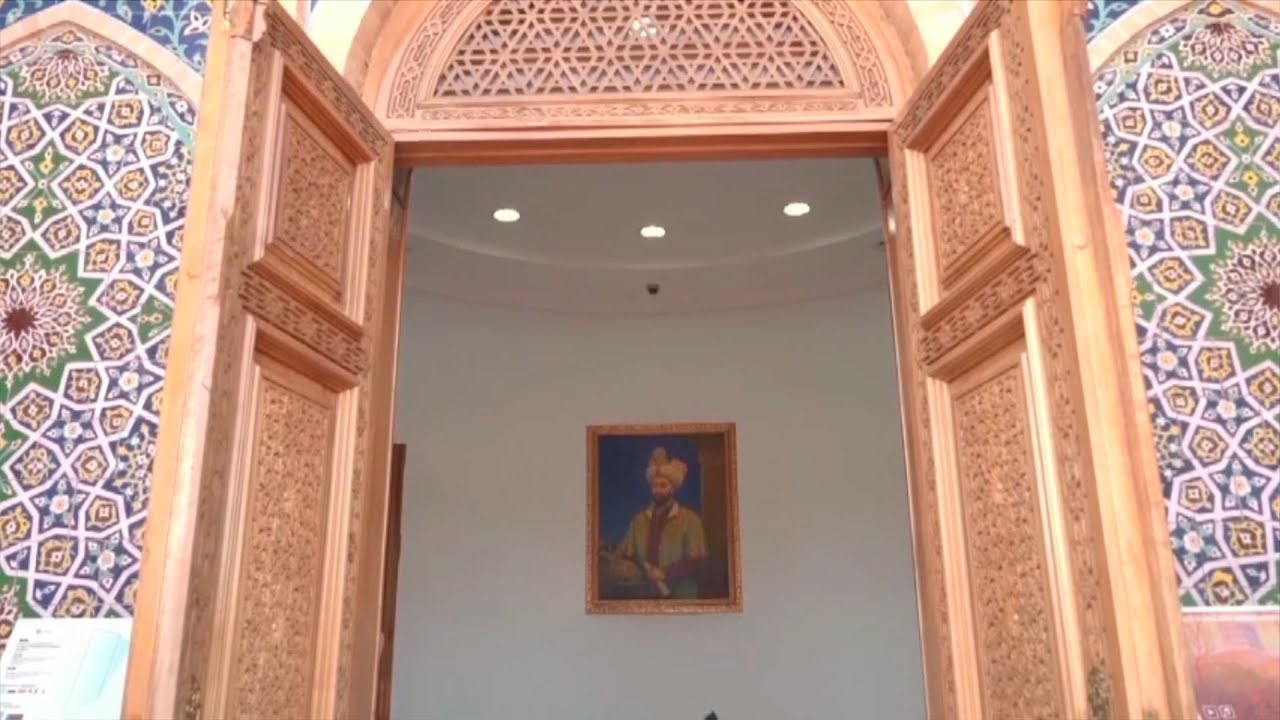
Beyond the Registan: Hidden Blue Tiled Gems
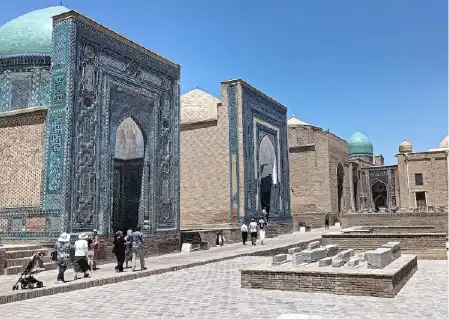
While the Registan is the star, Samarkand’s beauty extends far into its hidden corners. The Shah-i-Zinda necropolis is perhaps the most stunning portal in the city—a “street of tombs” where every inch of the narrow walkway is covered in the most vibrant tilework in Central Asia.
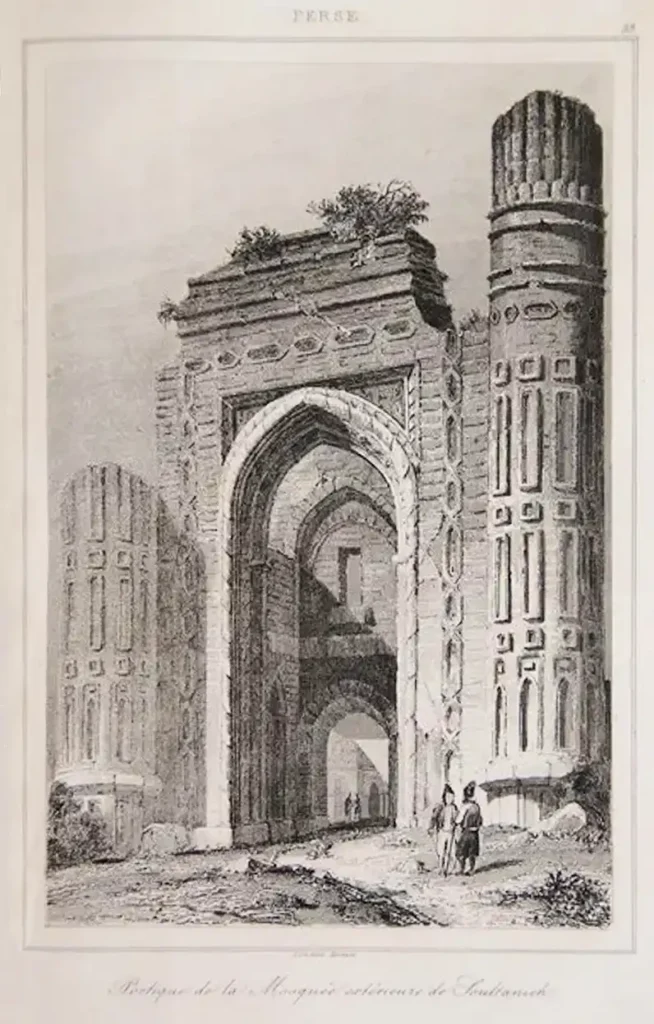
Then there is the Bibi-Khanym Mosque, once one of the largest in the Islamic world, whose scale alone is enough to leave you breathless.

Even today, if you wander through the local markets and bazaars, you can find modern artisans still firing tiles in traditional kilns, ensuring that the artistry of the Silk Road remains a living, breathing part of the city’s identity.
The Artistry in Every Tile: Craftsmanship Then and Now
The craftsmanship behind these tiles is a blend of mathematics, art, and spirituality. Each pattern—whether it’s a complex floral “islimi” design or a bold geometric “girih”—is a puzzle solved by hand. Historically, master craftsmen spent years perfecting the glazes to ensure they could withstand the harsh desert sun for centuries.
You might be interested in our Caucasus Tour Packages >>
Today, the tradition continues. Modern artisans in Uzbekistan still use traditional methods to restore these ancient sites and create new masterpieces. It is a tactile connection to the past. As you explore, try to spot the subtle variations in the shades of blue—each one tells a story of the person who made it and the trade routes that brought the pigments to their workshop.
Dreaming Your Own Blue Journey in Uzbekistan
These tiles represent more than just architectural decoration; they are symbols of human connection, beauty, and the enduring legacy of the Silk Road.
Have these images sparked your own curiosity about Central Asia?
There is a profound difference between seeing a photograph and standing in the shadow of a turquoise dome as the call to prayer echoes through the square.
When you’re ready to experience this mesmerizing beauty in person, we’re here to help you navigate the journey with ease and comfort. Explore more of the Five Stans region on our blog, or start dreaming of your own adventure under the blue skies of Samarkand.

Ready to see it yourself?
Tour Destinations Also Include: Turkmenistan, Uzbekistan, Georgia, Armenia, Kazakhstan, and many more
Read More:
- Why Uzbekistan is the Trending Destination This Year
- Why Tourists Love Tashkent, Capital of Uzbekistan
Discover more from East Site Travel
Subscribe to get the latest posts sent to your email.