A Culinary Odyssey: Savoring the Flavors of Uzbekistan on the Silk Road. From legendary Plov to hand-pulled Lagman, explore the best traditional dishes with East Site Travel.
Imagine a whisper of cumin carried on the breeze, the rhythmic clang of a kazan in a bustling market, and the comforting aroma of hand-pulled noodles simmering in a rich broth. This is Uzbekistan, a land where history is etched into magnificent azure domes, and where the vibrant pulse of the ancient Silk Road lives on, not least through its extraordinary cuisine. For the curious traveler seeking both comfort and cultural immersion, Uzbekistan offers a gastronomic journey unlike any other—a tapestry woven from centuries of trade, tradition, and unparalleled hospitality.
Discovering the Richness of Uzbekistan Cuisine
At East Site Travel, we believe that understanding a culture often begins at the table. On our curated Uzbekistan journeys, you’ll discover that Uzbek food is not merely sustenance; it’s a celebration, a communal ritual, and a profound expression of identity.
While the country’s culinary landscape is vast and varied, three dishes stand out as quintessential experiences, inviting you to taste the very heart of Central Asia: Plov, Manti, and Lagman.
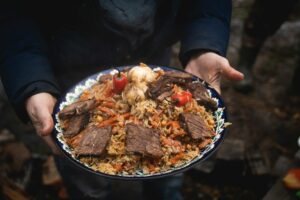
The Heart of Uzbekistan Cuisine: Plov (Pilaf)
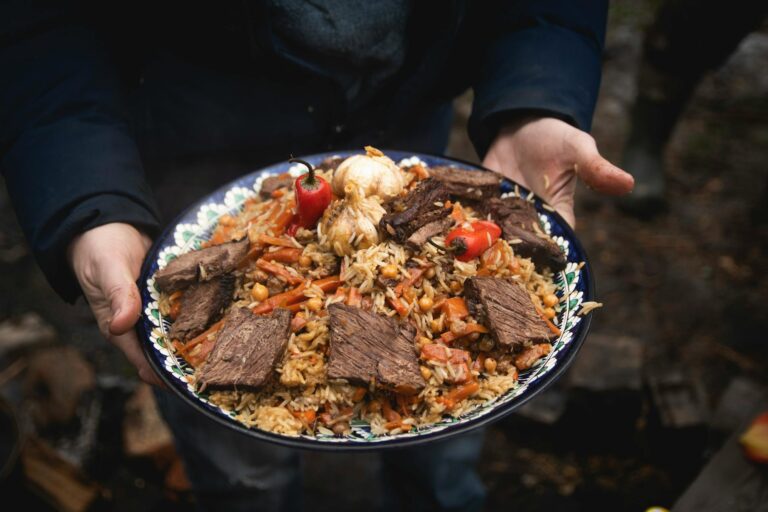
Often hailed as the national dish, Plov (also known as palov or osh) is more than just a meal; it’s a cultural phenomenon, a staple that graces every significant occasion, from joyous weddings to solemn gatherings. The preparation of Plov is an art form, a generations-old tradition recognized by UNESCO for its cultural importance.
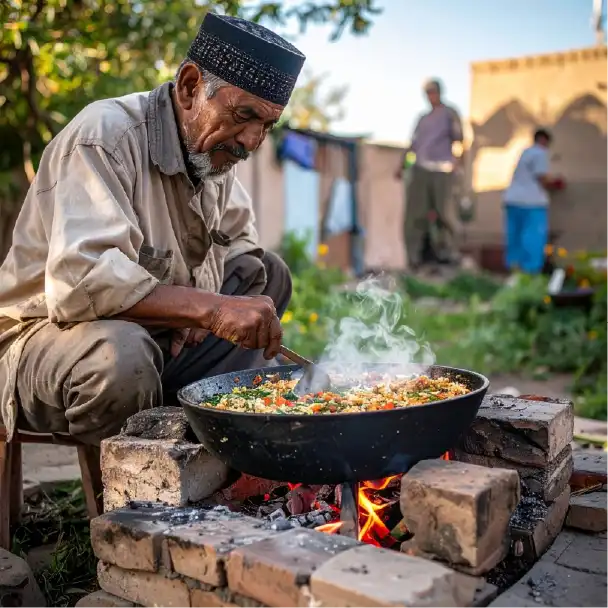

More Than a Dish, It’s a Ritual
The magic of Plov often begins long before it reaches your plate, in the outdoor kitchens where a master chef, an oshpaz, presides over a colossal kazan—a heavy, cast-iron cauldron.
Here, over an open flame, the ingredients slowly transform, their individual flavors melding into a harmonious symphony. The air becomes thick with the enticing scent of sizzling meat and spices, drawing you closer, a silent invitation to witness this culinary alchemy.
The communal spirit of Plov is palpable; it’s a dish meant for sharing, bringing families and communities together around a dastarkhan, a low dining table laden with an array of dishes.

The Art of the Perfect Plov
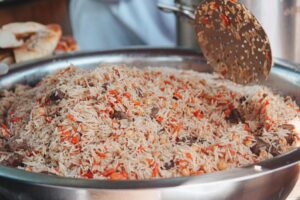
At its core, Plov is a hearty rice dish, but its seemingly simple components belie a sophisticated layering technique and a careful balance of flavors. The foundation, known as zirvak, is created by browning chunks of lamb or beef (though sometimes horse meat, chicken, or quail are used) in oil or animal fat, often from a fat-tailed sheep.
Next, julienned carrots and thinly sliced onions are added, cooked until sweet and caramelized. Depending on the region and occasion, chickpeas, raisins, quince, garlic, or even barberries might be incorporated, adding layers of texture and taste.
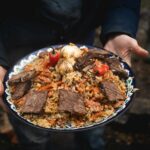
Finally, long-grain rice, specifically chosen for its ability to absorb flavor, is carefully layered on top, then simmered until perfectly fluffy, absorbing all the rich aromas from beneath.
Samarkand Plov vs. Tashkent Plov
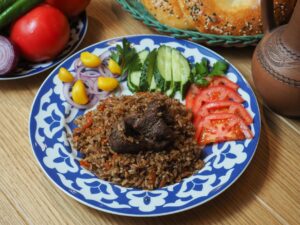
Regional variations abound, offering a delightful exploration for the palate. In Tashkent, you might find Plov prepared with yellow carrots and served with kazy (horse sausage), while Samarkand Plov is often characterized by its layered presentation, with rice, carrots, and meat distinctly separated. Bukhara offers its own unique take, where ingredients are cooked separately before being layered into the pot. Each spoonful tells a story of local terroir and generations of culinary mastery.
| Tashkent Plov (Wedding Style) | Samarkand Plov |
|---|---|
| Roasted & Mixed: All ingredients are roasted at the beginning. The rice absorbs more oils and juices during the process. | Layered & Steamed: Ingredients are stacked in layers and steamed without mixing during the cooking process. |
| Rich & Darker: Often has a deeper, more saturated brown color from roasting. Known for a robust, savory flavor. | Light & Delicate: Characterized by light-colored rice and a gentler flavor profile. Often described as “lighter” or “sweeter”. |
| Typically includes yellow carrots, chickpeas, and raisins. It is often topped with kazy (horse sausage). | Primarily uses yellow carrots. It may include barberries for a tangy sweetness. |
Traveler’s Tip: To experience authentic Plov, seek out a dedicated “Plov Center” in cities like Tashkent (such as Habib Abdullayev) or Samarkand (Samarqand Osh Markazi N1, Mahalla Osh, or Sitora Osh), where skilled oshpaz prepare vast quantities in immense kazans, often only for lunch. Don’t be surprised if it’s served on a large platter for communal eating, often enjoyed with fresh non (flatbread) and a simple tomato and onion salad (achichuk) to complement its richness.
Traditional Uzbekistan Dumplings: Savoring Manti

By Mizu basyo – Own work, CC BY-SA 3.0, Link
From the robust heartiness of Plov, we turn to the delicate artistry of Manti, steamed dumplings that represent another beloved facet of Uzbek cuisine. These tender parcels, found throughout Central Asia, are a testament to the region’s rich culinary exchange along the Silk Road.
A Legacy of Steamed Perfection
Steaming is the gentle cooking method that defines Manti, preserving the succulence of their fillings and creating a wonderfully soft, almost ethereal dough. Served hot, often piled high on a colorful platter, Manti are an invitation to savor each bite, allowing the delicate wrapper to yield to a burst of savory flavor. There’s a particular satisfaction in biting into a perfectly crafted Manti, feeling the warmth and the mingling of textures and tastes. Traditionally, Uzbeks often eat Manti with their hands, a practice that enhances the experience by keeping all the juicy filling intact with each delicious bite.
Crafting the Ideal Manti
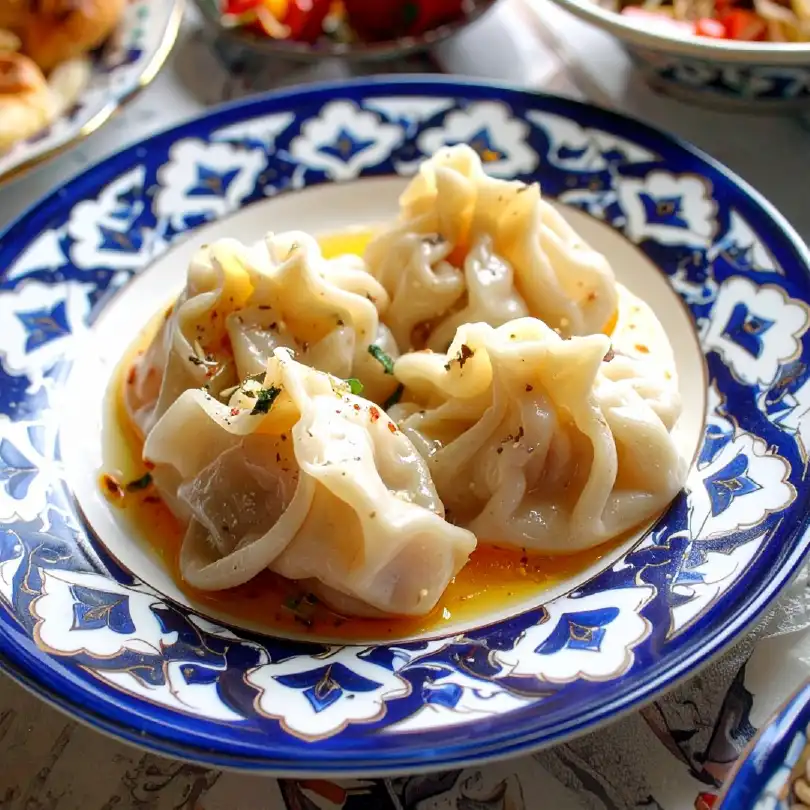
The foundation of Manti is a thin, delicate dough, typically made from flour, water, and sometimes eggs. What truly elevates Manti, however, are their diverse and flavorful fillings. The most classic variations feature finely minced lamb or beef, generously combined with onions and a blend of aromatic spices like cumin and black pepper. For those seeking vegetarian options, Manti are frequently filled with pumpkin, potato, or a mixture of greens, particularly appealing during the autumn harvest. The intricate pleating of the dough, often a mark of a skilled hand, seals in the savory juices, ensuring every dumpling is a self-contained pocket of delight.
Manti are traditionally steamed in a kaskan, a special multi-tiered metal steamer, ensuring even cooking and a tender finish. They are typically served with a dollop of fresh sour cream (smetana or suzma), sometimes a homemade tomato sauce, or simply garnished with fresh dill or parsley, adding a refreshing tang that beautifully complements the rich filling.
Traveler’s Tip: For an exceptional Manti experience, explore local tea houses and specialized Manti restaurants. In Tashkent, establishments like MANDU MANTI are renowned for their steamed dumplings, often offering several varieties to choose from. Don’t hesitate to try both meat and pumpkin fillings to discover your personal favorite!
Lagman: A Noodle Story from the Steppe
The Silk Road was a conduit not only for goods but also for culinary traditions, and few dishes exemplify this cross-cultural exchange as beautifully as Lagman. A hearty and comforting noodle dish, Lagman finds its roots in ancient China, evolving over centuries with influences from Uyghur and Dungan cultures, before becoming a beloved staple across Central Asia, including Uzbekistan.
Hand-Pulled Heritage
The magic of Lagman lies in its noodles—hand-pulled to a remarkable length and elasticity. Witnessing the creation of Lagman noodles is a captivating experience: skilled chefs, often men, rhythmically stretch and slap long rolls of dough, transforming them into thin, springy strands with an almost mesmerizing grace. This artisanal process ensures a texture that is both chewy and satisfying, a perfect vehicle for the rich flavors of the accompanying broth and vegetables.
The dish itself is a vibrant symphony of color and taste, a rich, savory broth brimming with tender pieces of meat (usually lamb or beef), and a generous medley of fresh, seasonal vegetables. The aroma of simmering spices—cumin, coriander, paprika—mingles with the scent of garlic and fresh herbs, promising a deeply satisfying meal.
The Versatility of Lagman
Lagman’s versatility is one of its most appealing characteristics. It can be served as a comforting soup (Suyuk Lagman), with the hand-pulled noodles immersed in a flavorful, often slightly spicy, broth filled with tender meat and chunky vegetables like bell peppers, tomatoes, carrots, and onions.
Alternatively, you might encounter Qovurma Lagman, a fried version where the noodles are stir-fried with meat and vegetables, offering a drier, more intense flavor and a delightful textural contrast. Each region in Uzbekistan may have its own distinct style of preparing Lagman, further highlighting its adaptability. Whether you prefer it soupy and warming or stir-fried and robust, Lagman offers a unique and memorable noodle experience.
Traveler’s Tip: Lagman is widely available in local restaurants and tea houses. In Bukhara, Dilkor (Лагманная) is known for its delicious Lagman, and many places will make their own noodles fresh daily. Don’t miss the chance to observe the noodle-making process if you can; it’s a culinary performance in itself!
Other Must-Try Dishes in Uzbekistan Cuisine
While Plov, Manti, and Lagman are undoubtedly the stars, the Uzbek culinary universe is vast and tempting. You’ll encounter delectable Samsa, savory pastries often filled with minced meat or pumpkin and baked in a traditional tandyr oven, offering a delightful street-food experience. Shashlik, succulent skewers of marinated meat grilled over hot coals, are ubiquitous and utterly irresistible.
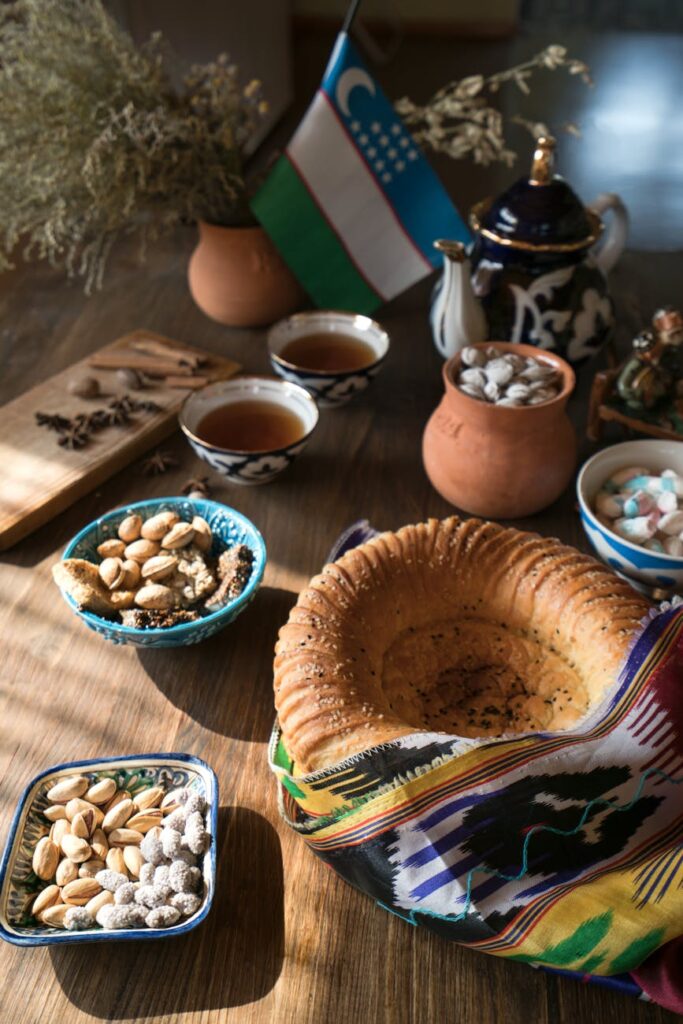
And no meal is complete without Non (bread), a sacred staple in Uzbek culture, baked in ornate, round loaves, often stamped with intricate patterns. Its fresh, comforting presence accompanies nearly every dish.
The markets themselves are a feast for the senses, overflowing with vibrant seasonal fruits and vegetables, aromatic spices, and a dazzling array of dried fruits and nuts. Exploring these bustling bazaars is a culinary adventure in its own right, offering insights into the fresh ingredients that form the backbone of Uzbek cuisine.
Savoring Uzbekistan with East Site Travel
At East Site Travel, we craft journeys that go beyond sightseeing, inviting you to truly immerse yourself in the culture and flavors of Uzbekistan. We curate experiences that connect you with the heart of local life, from enjoying Plov in a traditional choyxona to learning the secrets of Manti preparation from local hosts. Our comfort-forward approach ensures that your culinary explorations are seamless and delightful, allowing you to fully savor every moment and every mouth-watering dish. We understand that exploring unfamiliar destinations can bring questions, and we are here to provide reassuring, confident guidance every step of the way.
Imagine yourself seated at a bustling market, the scent of spices and freshly baked bread filling the air, a plate of golden Plov before you, steam rising enticingly. Picture the delicate texture of a hand-pleated Manti, or the comforting warmth of a bowl of Lagman after a day of exploring ancient cities.
With East Site Travel, these vivid scenes become your reality.
Conclusion: A Taste of Memory
Uzbekistan’s culinary heritage is a vibrant expression of its history, its people, and its enduring hospitality. Each dish is a story, an invitation to connect with a culture that values shared meals and warm welcomes. To taste Uzbekistan is to taste the essence of the Silk Road—a fusion of flavors that are both exotic and deeply comforting. As you embark on this culinary odyssey, you’ll not only discover incredible food but also create cherished memories that will linger long after your journey ends.
Ready to embark on your own culinary adventure through the heart of Central Asia?
Explore our curated Central Asian tours and let East Site Travel guide you to an unforgettable taste of Uzbekistan. We’re here to help you choose what’s right for you.
Credits:
– Mani Photo by Ramón from Llanera, España ; brightened by Off-shell – Brighter version ofFile:Uzbek_Manti.jpgSource of original file: Mantı, CC BY-SA 2.0, https://commons.wikimedia.org/w/index.php?curid=40927230
Discover more from East Site Travel
Subscribe to get the latest posts sent to your email.