Traveling through Central Asia and the Caucasus — across Uzbekistan, Kazakhstan, Kyrgyzstan, Turkmenistan, Tajikistan, Azerbaijan, Georgia, and Armenia — is an unforgettable journey through Silk Road cities, mountain landscapes, and rich food traditions. One of the most common questions travelers ask before joining a 5 Stans tour or a Caucasus tour is whether they will be able to follow their dietary restrictions while exploring this region.
The answer is: absolutely yes — with comfort, flexibility, and plenty of delicious choices.
Why Dietary Restrictions Matter on Silk Road Tours
Food is one of the most memorable aspects of travel, but it can also be a source of concern for those with vegetarian, vegan, or allergy‑related needs. Tours across Central Asia and the Caucasus now prioritize dietary restrictions as part of their hospitality. Flexible dining options and carefully selected restaurants ensure that travelers can enjoy authentic cuisine without compromising their lifestyle.
Traditional Food Culture in Central Asia and the Caucasus
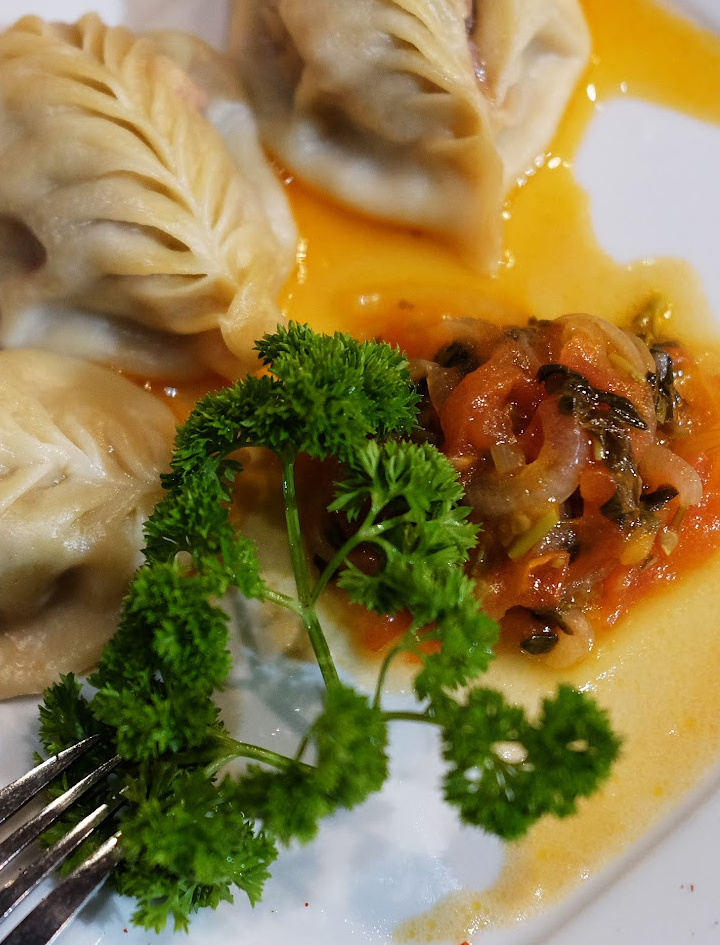
Local cuisine is famous for hearty dishes rooted in nomadic and mountainous traditions. Signature meals such as plov, kebab, shashlik, lagman, manty, khinkali, and khashlama showcase the region’s reliance on meat and dairy. Yogurt drinks, cheeses, and fermented milk are staples, reflecting centuries of culinary heritage.
Historically, vegetarianism and veganism were rare, but international tourism has changed the landscape. Larger cities like Tashkent, Samarkand, Bukhara, Almaty, Bishkek, Baku, Tbilisi, and Yerevan now offer diverse menus that accommodate dietary restrictions, making it easier than ever for travelers to find suitable meals.
Vegetable-Centric Diets
- Georgian food is particularly rich in vegetable and walnut-based starters.
- Vegan Options:
- Badrijani Nigvzit: Fried or roasted eggplant rolls that are stuffed with a delicious, creamy walnut-garlic paste and garnished with pomegranate seeds.
- Ajapsandali: A stew often compared to ratatouille, made with eggplant, potatoes, tomatoes, bell peppers, and fresh herbs. It’s typically served cold.
- Many Armenian dishes traditionally eaten during Lent (known as Pasus or Samarkho) are vegan.
Meat-Centric Diets
Meat-centric diets will also enjoy an array of options along the Silk Road.
- Beshbarmak: Considered the national dish of Kazakhstan and Kyrgyzstan. It literally means “five fingers,” as it was traditionally eaten with the hands.
- Shashlik (Kebab): Skewers of grilled, cubed meat (usually mutton, beef, or chicken) that are marinated and cooked over hot coals.
- Kuurdak (Quyrdak): A rustic, one-pot dish of fried meat (traditionally mutton or beef, often with offal like liver and kidney) that is stewed with onions and sometimes potatoes
Whether you are a devoted meat-eater enjoying the rich, savory traditions of the Silk Road, or you require vegetarian or vegan meals, the region offers plenty of delicious choices.
To ensure every traveler is comfortable and well-fed throughout their journey, we have carefully structured our meal process. Here is how meals work on our Silk Road Tour.
Vegetarian, Vegan, and Plant‑Based Options
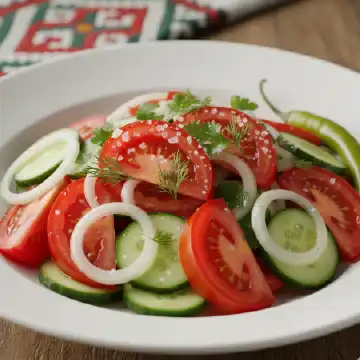
Although national cuisine is meat‑forward, most restaurants now offer several vegetarian‑friendly dishes. Travelers can expect to find cream soups made from mushrooms, broccoli, spinach, or pumpkin; simple vegetable broths; fresh salads of tomato, cucumber, and herbs; warm vegetable dishes such as sautéed eggplant or roasted peppers; grilled vegetable shashlik; and international staples like pizza and pasta that can often be customized. Bread and bakery items, central to the cuisine, are almost always available.
These options make vegetarian and vegan travel in Central Asia increasingly accessible, allowing travelers to maintain their dietary restrictions without difficulty.
Diets Successfully Accommodated
Over the years, tours have welcomed travelers with a wide range of eating styles. Pescetarians, pollo‑vegetarians, flexitarians, raw food enthusiasts, fruitarians, vegans, and various forms of vegetarians (lacto‑ovo, lacto, and ovo) have all found suitable meals daily. The flexibility of restaurant menus ensures that dietary restrictions are respected and accommodated.
Vegetarian Delights, Lactose and Gluten Free, Blood Sugar, and Carnivore Diets
In contrast, the mountainous regions of the Caucasus, particularly Georgia and Armenia, offer an abundance of naturally vegetarian options. The cuisine relies heavily on fresh herbs, pomegranates, walnuts, and seasonal vegetables. Georgian cuisine is especially friendly to plant-based diets, with appetizers built around rich, flavorful walnut paste (nigvzis sakmazi).
So many options to choose from in Caucasus and the Stans. Here are a few from Caucasus:
- Pkhali (Georgia): A colorful appetizer of minced vegetables (spinach, beetroot, or cabbage) mixed with a potent walnut paste, garlic, and herbs, served cold and often topped with pomegranate seeds.
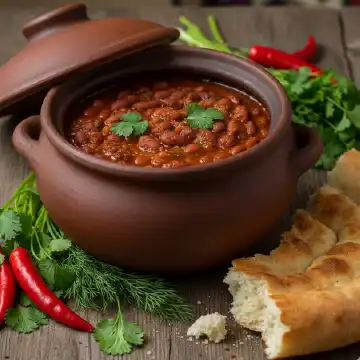
- Lobio (Georgia): A satisfying, slow-cooked bean stew made with red kidney beans, onions, and a distinct blend of Georgian spices. It is often served in a clay pot with traditional cornbread (Mchadi).
- Ailazan (Armenia): A savory, rustic vegetable stew made from a seasonal mix of eggplant, potatoes, bell peppers, and tomatoes.
- Pasus Tolma (Armenia): The Lenten (vegan) version of dolma, where cabbage leaves are stuffed with a mixture of lentils, chickpeas, beans, and bulgur instead of meat.
- Mangal Salatı (Azerbaijan): A smoky, flavorful salad made from eggplant, tomatoes, and bell peppers that are grilled over hot coals (a mangal), then peeled, chopped, and mixed with fresh herbs and onions.
And vegetarian options in the 5 Stans:
- Ash-i Lyuwan (Lentil Soup): A common, hearty soup found across the region, made from lentils, onions, carrots, and herbs. It is generally vegan, but always confirm that no meat broth (or qazi fat) was used.
- Shakarob (Tomato and Onion Salad): A ubiquitous, simple, and refreshing salad made from sliced tomatoes, thinly sliced white onions, and sometimes cucumbers, often dressed with salt and a touch of oil. This is always vegan.
- Mastava (Rice Soup): A thick, tomato-based rice soup containing vegetables like carrots, potatoes, and sometimes beans. It is sometimes prepared with meat, so be sure to request the vegetarian version (go’s-siz in Uzbek).
- Samsa with Pumpkin (Qovoq Somsa): While the classic samsa is meat-filled, a highly popular and widely available alternative is the filling made from sweet pumpkin and onions, baked inside the flaky pastry dough in a tandoor oven. This is vegan.
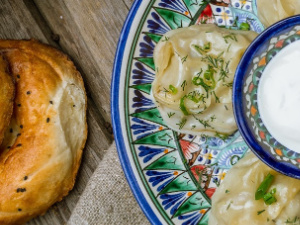
- Vareniki / Pelmeni (Doughnuts): Though native to Eastern Europe, these are common across Central Asia. You can find them filled with potato or cabbage (ensure they are served with oil, not sour cream/butter).
- Lagman (Noodle Dish): A central dish of pulled noodles, often served as a soup. While the traditional broth is meat-based, you can often request the noodles with a mushroom or vegetable sauce (qo’ziqorin in Uzbek) in modern restaurants.
These dishes, combined with fresh nan (bread), boiled potatoes, and seasonal fruits, form the basis of a vegetarian diet while traveling the Silk Road.
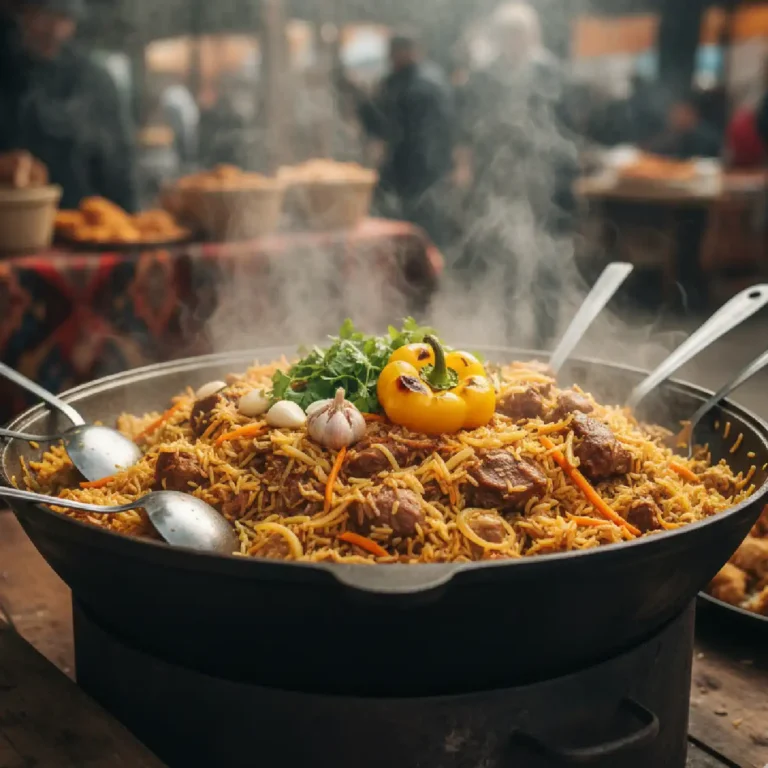
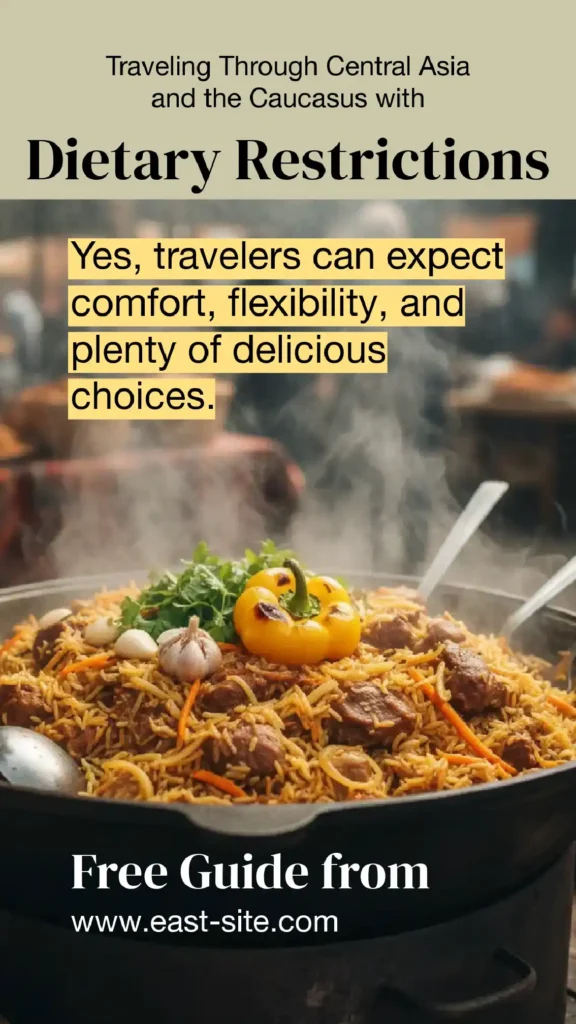
The cuisine of Central Asia is built around the use of mutton (lamb), beef, and fat, often cooked in large quantities over long periods. Plov is the most celebrated example, an Uzbek masterpiece of rice, meat, carrots, and onions cooked together in a kazan (cauldron). In Kazakhstan and Kyrgyzstan, the festive and historical dish is Beshbarmak, a communal plate of boiled meat and noodles traditionally eaten by hand. These dishes highlight the hospitality culture, where serving meat demonstrates respect for guests.
In major cities, finding suitable plant-based meals is straightforward. You can expect to find:
- Cream Soups: Common varieties include mushroom, broccoli, pumpkin, or spinach soup, often made with plant-based stock.
- Simple Salads: Freshly chopped tomato, cucumber, and herb salads, usually dressed with oil and vinegar, are available everywhere. Always specify “no sour cream” or “no yogurt” (“bez smetany” in Russian) to ensure vegan compliance.
- Carb Staples: Simple rice (ris), boiled or fried potatoes (kartoshka), and fresh bread (nan/non) are ubiquitous and reliably vegan.
- Grilled & Sautéed Vegetables: Dishes like sautéed eggplant, roasted peppers, and grilled vegetable shashlik are widely available and delicious.
- Noodle Dishes: Lagman (hand-pulled noodles) is a staple soup/main course across Central Asia. While traditionally meat-based, you can often request the noodles and vegetable broth without meat or, in modern restaurants, ask for a mushroom-based preparation.
Many Georgian and Armenian vegetable dishes are naturally vegan and thus dairy-free. For Central Asia, simply specifying “bez smetany” (without sour cream) or avoiding milk-based teas (like Mongolian Suutei tsai) is key.
- Lobio (Georgia): A thick, spiced bean stew traditionally served in a clay pot. It is naturally vegan.
- Mchadi (Georgia): A traditional, dense cornbread made from just cornmeal, water, and salt. It is inherently vegan and gluten-free (if pure cornmeal is used).
- Pickled Vegetables (All Regions): Pickles (turshu in Central Asia, jonjoli in Georgia) are ubiquitous starters and sides, and are always dairy-free.
- Mushroom Dishes (Georgia): Simple fried or baked mushrooms (soko) cooked on a clay dish (ketsi) are common and typically dairy-free unless cheese is specifically added.
- Samsa with Pumpkin (Central Asia): A common, sweet or savory version of the baked pastry filled with pumpkin and onion. Ask to ensure it’s made with oil, not butter or qazi (animal fat).
The main challenge for gluten-free diets is the prevalence of bread (nan/non), dumplings (manty, buuz, khinkali), and noodles (lagman). Your best replacements are:
- Mchadi (Cornbread) & Ghomi (Georgia): Mchadi is a dense cornbread, and Ghomi is a thick porridge made from cornmeal, both naturally gluten-free substitutes for wheat bread.
- Rice (Plov): The most reliable, naturally gluten-free staple throughout Central Asia and the Caucasus.
- Boiled/Fried Potatoes: Served as a side dish (Kartoshka) in all regions.
Ask for clarification: In traditional Central Asian soups like Shorpo or Mastava, always ask to ensure the specific preparation has no noodles/dumplings and is made with water or vegetable broth, not a meat/fat broth.
How Meals Work on Our Silk Road Tours
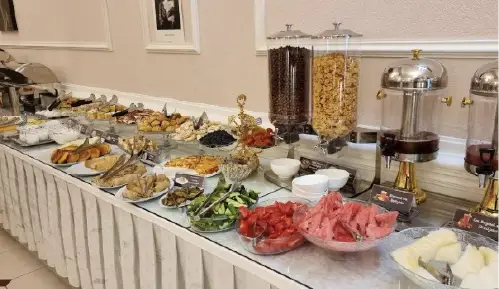
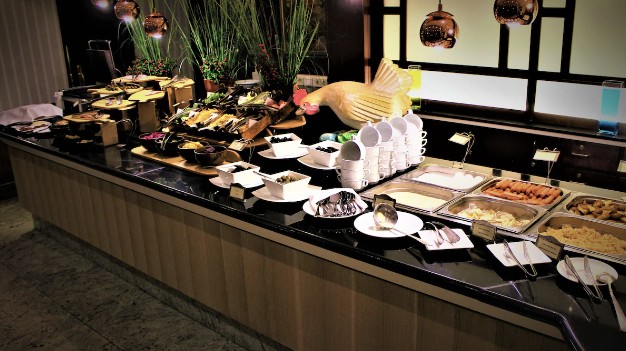
To make journeys comfortable, tours provide three meals a day throughout the itinerary. Breakfasts are served buffet‑style at hotels, with eggs, pastries, bread, cereals, fresh vegetables and fruits, dairy products, sweets, coffee, tea, and juices.
Lunches and dinners take place at local restaurants carefully chosen along the route, where travelers enjoy a salad, soup, main course, and non‑alcoholic beverages such as water, tea, or soft drinks.
See Also:
- Exploring Central Asia After Retirement
- Don’t Overpay for Your 5 Stans Tour
- Currency Tips for Central Asia and Caucasus Travel
Alcoholic drinks are widely available but not included in the tour price. Typical costs are modest, with beer averaging $2–3 and wine $7–10 per bottle. Because meals are not pre‑ordered, travelers can freely choose dishes that suit their dietary restrictions — a major advantage for vegetarians, vegans, and those with special diets.
What to Expect From Local Cuisine
While modern restaurants are becoming more adaptable, it is helpful to keep expectations realistic. Traditional national dishes in both Central Asia and the Caucasus remain meat‑forward, and vegetarian versions of plov, lagman, kebab, manty, or khinkali are rare. Hospitality culture places a strong emphasis on meat, but locals are respectful toward foreign guests’ preferences. Urban centers are more flexible, while remote regions may offer simpler vegetarian choices. Still, thanks to flexible ordering and the growing influence of global tourism, most travelers eat comfortably every day.
Essential Local Phrases
While English is spoken in major tourist centers, learning a few phrases helps ensure your dietary needs are understood:
- Russian: “Ya vegetarián / ya vegán” (I am vegetarian / I am vegan).
- Uzbek: “Go’s-siz” (without meat).
- Georgian: “Khórtzi ar vitcham” (I don’t eat meat).
Urban Centers vs. Remote Regions
Cities like Tashkent, Almaty, Tbilisi, and Yerevan offer the most variety, including dedicated vegetarian/vegan cafes and international food choices. You can expect to order flexible meals at every stop.
When traveling to smaller villages or mountain guesthouses, options become simpler. Meals may consist of staple items like bread, jam, simple boiled vegetables (potatoes/carrots), and seasonal fresh fruit (grapes, apricots, melons). Rest assured, your host or guide will always find wholesome, suitable food for you.
Still, thanks to flexible ordering and the growing influence of global tourism, most travelers eat comfortably and deliciously every day.
Travel With Confidence Across the Silk Road
Choosing a Silk Road tour across the 5 Stans and the Caucasus does not mean sacrificing your dietary lifestyle. With daily meals included, flexible dining, and an increasing number of vegetarian and vegan options, travelers with dietary restrictions can fully enjoy the landscapes, culture, architecture, and history that make this region remarkable.

Join Us on a Tour
Destinations Include: Turkmenistan, Uzbekistan, Georgia, Armenia, Kazakhstan, and many more
Whether you are exploring ancient Silk Road cities, crossing mountain passes, or visiting bustling bazaars, you can travel confidently knowing that your dietary needs will be respected and accommodated.
Discover more from East Site Travel
Subscribe to get the latest posts sent to your email.