Before you commit to five stans travel, it helps to know what actually sets each country apart, especially if you’re comparing different Central Asia tour packages before you book.
These five nations get grouped together on a single itinerary, but they’re not interchangeable. Each one brings its own landscape, history, and rhythm to the trip, and knowing what to expect from each stop makes the whole journey easier to appreciate.
Some travelers arrive expecting one long, similar-feeling desert crossing. In reality, you’ll move from alpine lakes to Silk Road cities to stark white marble monuments within the space of a few weeks, and each transition feels distinct enough that the trip rarely starts to blur together.
This guide walks you through Kazakhstan, Kyrgyzstan, Uzbekistan, Tajikistan, and Turkmenistan one at a time, covering the attractions, landscapes, and cultural details that define each country. Whether you’re deciding if this region is right for you or simply want context before you go, here’s what you can expect from each stop along the way.
Let’s take a look at what makes that particular country worth the time you’ll spend there, so you can go in with a clear sense of what’s ahead rather than treating the whole trip as one blurred itinerary.
What Makes Kazakhstan Worth Visiting?
As the largest country in Central Asia, Kazakhstan offers a striking mix of scale and diversity. You’ll likely start your trip in Almaty, a city set against the Tien Shan mountains, where leafy boulevards and Soviet-era architecture sit alongside modern cafes and bustling bazaars.

Kazakhstan’s landscape ranges from glaciers and alpine lakes to deep steppe, and its history runs just as deep, with more than 27,000 monuments of antiquity scattered across the country.
Highlights in and around Almaty include:
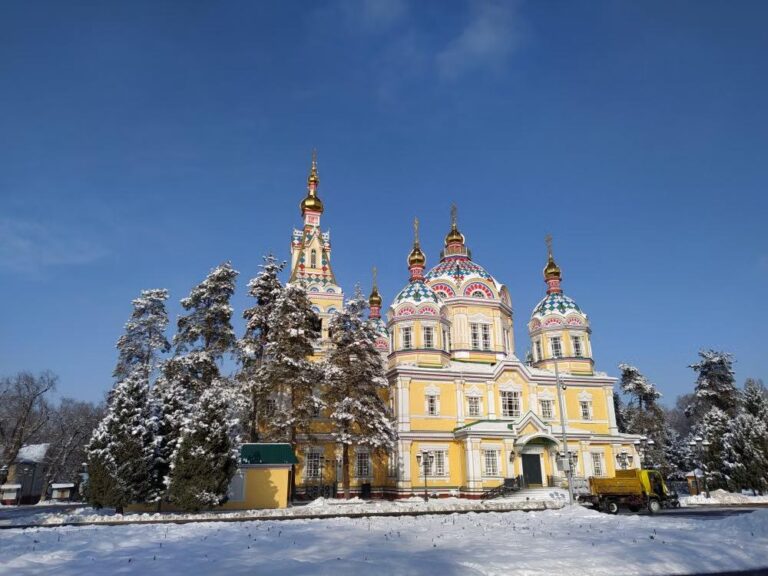
- Panfilov Park and the Ascension (Zenkov) Cathedral, a wooden Russian Orthodox landmark built without a single nail
- The Central State Museum, a good introduction to the country’s Soviet and pre-Soviet history
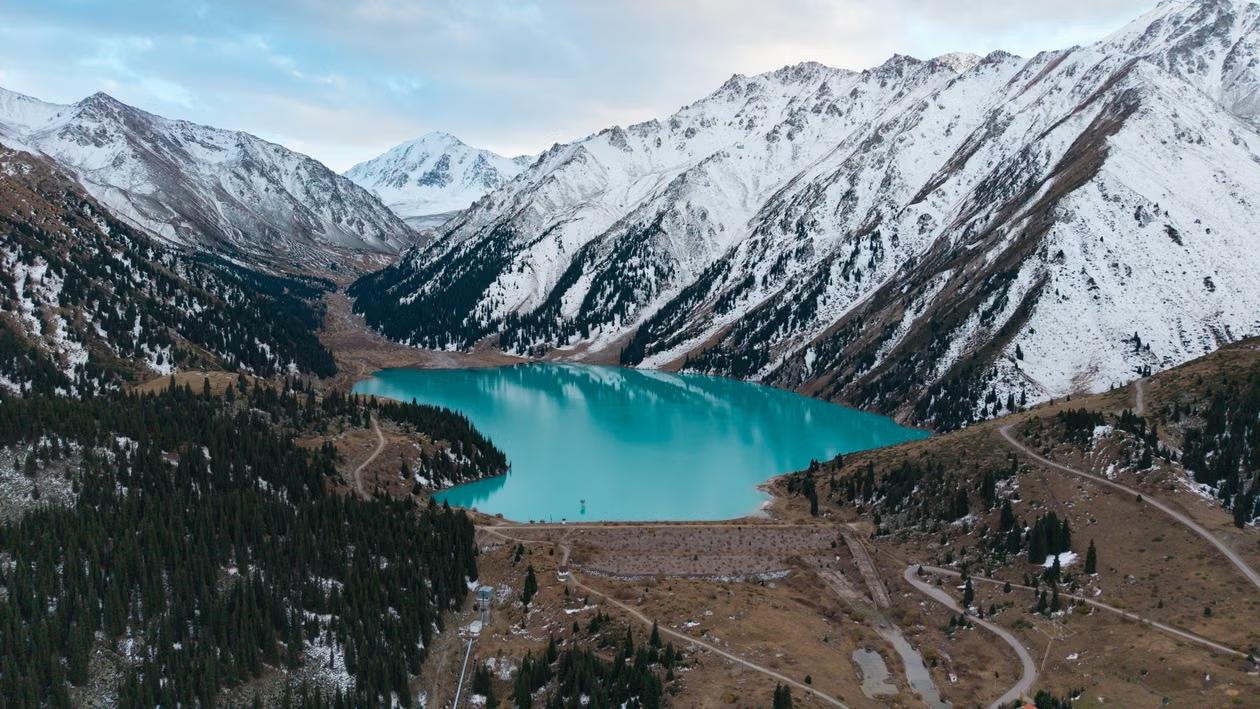
- Big Almaty Lake, a turquoise alpine reservoir set high in the surrounding mountains
- Local bazaars offering a first taste of Central Asian food and craft culture
For many travelers, Kazakhstan’s blend of natural scenery and layered history makes it a comfortable, easy introduction to the region, which is part of why Kazakhstan group tours have grown in popularity with first-time visitors to Central Asia.
Because Almaty is your likely arrival point, you’ll also find the country’s best hotel selection here, along with the smoothest transition into the rest of the trip. It’s a gentle place to adjust to the time change before the pace picks up in the countries that follow.
What Should You Expect from Kyrgyzstan?
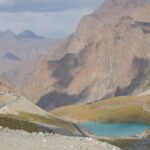
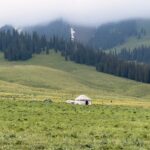
Kyrgyzstan is the most mountainous stop on the route, with roughly 93 percent of the country covered by the Tien Shan and Pamir ranges. If you value dramatic scenery, this is where the trip tends to slow down and let you take it in.
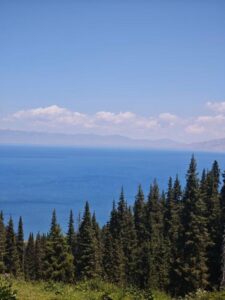
Bishkek, the capital, offers a manageable introduction with its Central Museum, Panfilov Park, and local bazaars. From there, the road leads toward Issyk-Kul, one of the largest mountain lakes in the world, sitting at more than 1,600 meters above sea level and ringed by snow-capped peaks, and consistently ranked among the most memorable places to visit in Kyrgyzstan.
Along the way, you’ll likely pass:
- Burana Tower, an ancient minaret near the town of Tokmok
- Grigorevka Gorge, a fir-forested valley considered one of the most scenic in the Issyk-Kul region
- Local family-run stops where traditional Kyrgyz meals are served
Kyrgyzstan rewards travelers who appreciate nature as much as history, offering some of the most photogenic landscapes anywhere on a five stans travel itinerary.
Hotel options here are simpler than in Uzbekistan’s larger cities, but the tradeoff is worth it. Lakeside accommodations near Issyk-Kul tend to be comfortable and quiet, and the slower pace of this leg of the trip gives you a genuine chance to rest between more demanding travel days.
Why Is Uzbekistan the Heart of the Five Stans?
If one country anchors a Central Asia trip, it’s Uzbekistan. Home to Tashkent, Samarkand, Bukhara, and Khiva, it holds the highest concentration of Silk Road landmarks in the region, which is why Uzbekistan small group tours typically dedicate more time here than to any other single country.
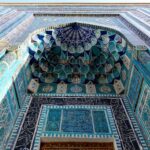
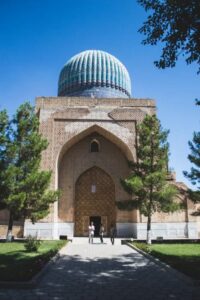
Tashkent offers your first stop, with the Khast Imam Complex housing one of the world’s oldest surviving copies of the Quran, alongside the lively Chorsu Bazaar. From there, Samarkand delivers some of the region’s most recognizable sights: Registan Square, the Bibi-Khanym Mosque, and the Shah-i-Zinda necropolis, a collection of elaborately tiled mausoleums.
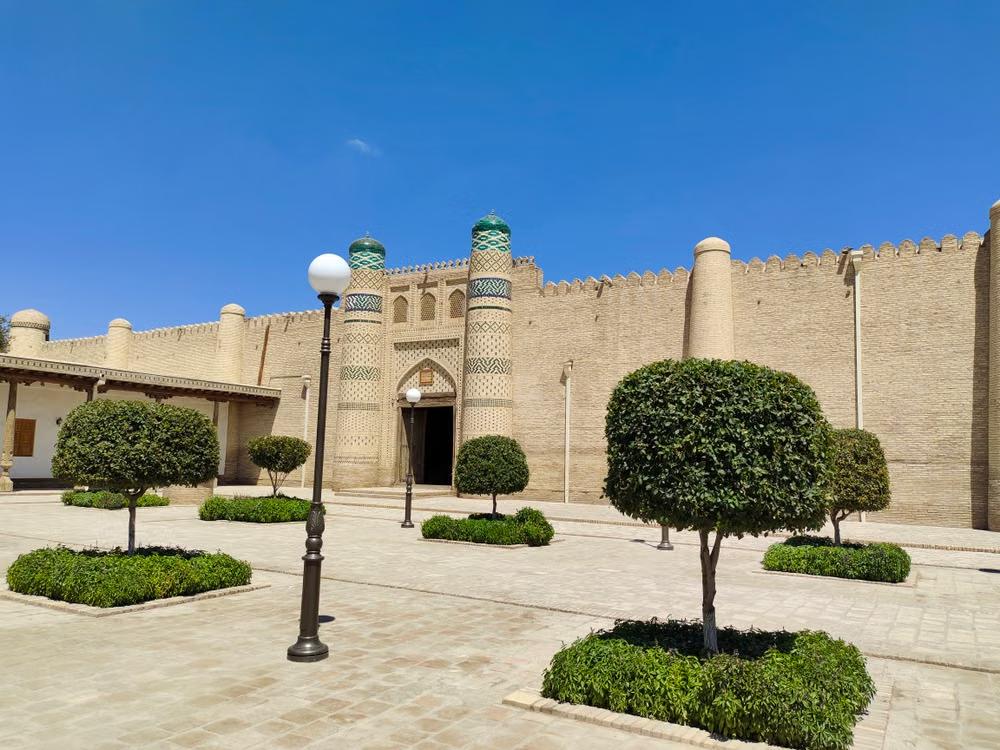
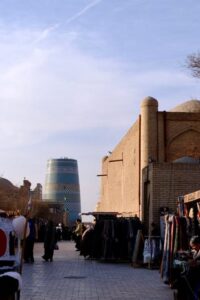
Bukhara, a UNESCO World Heritage Site recognized for its remarkably intact medieval urban fabric, adds centuries-old madrasahs, the Ark Fortress, and the Lyabi Khauz complex to the list. Khiva rounds things out with Itchan Kala, its walled inner city and the first site in Uzbekistan added to the UNESCO World Heritage List.
Other highlights across the country include:
- Ulugbek’s Observatory in Samarkand, one of the most advanced astronomical facilities of its era, built in the 1420s
- The Siyob Bazaar, known for its round non bread found nowhere else quite the same way
- The Samanid Mausoleum in Bukhara, one of the finest surviving examples of early Islamic architecture, dating to the 10th century
- The Kalon Complex in Bukhara, combining a minaret, mosque, and madrasah that remain active today
Given how much ground Uzbekistan covers, most itineraries spend more nights here than anywhere else on the route.
That extra time works in your favor. Uzbekistan also has the region’s strongest selection of boutique and heritage hotels, many built into restored historic buildings, so the additional nights here tend to be some of the most comfortable of the entire trip rather than the most tiring.
What Makes Tajikistan Different from the Other Stans?
Tajikistan is often the shortest stop on a five stans travel itinerary, and that’s part of its appeal. A one-day excursion typically centers on Khujand, the country’s second-largest city, founded roughly 2,300 years ago during the era of Alexander the Great.
Sitting in the Fergana Valley, Khujand grew wealthy from its position along the Silk Road, building palaces, mosques, and citadels before being conquered by Genghis Khan’s army in the 13th century. The city still carries visible layers of that long history in its architecture and museums. Today, its highlights include:
- Timurmalik Fortress, a reconstructed citadel with sweeping views over the city
- Panjshanbe Bazaar, one of the most interesting markets in the region, easily among the most iconic in Central Asia
- The Sheikh Muslihiddin Mosque and Mausoleum, a quieter but historically rich stop nearby
Because Tajikistan is mountainous in nearly every direction outside the valley, this brief stop offers a noticeably different landscape and pace compared to the desert stretches that come before and after it.
Since the visit is short, typically a single overnight in Khujand, you won’t need to adjust your expectations for comfort here. It functions as a well-paced pause between two very different halves of the trip rather than a demanding detour.
What Is Turkmenistan Known For?
Turkmenistan is arguably the most visually unusual stop on the route. Ashgabat, the capital, holds a Guinness World Record for the highest concentration of white marble buildings anywhere, earning it the nickname the White Marble City.
Beyond the marble monuments, ancient history awaits nearby at Merv, a UNESCO World Heritage Site and one of the most rewarding things to see in Turkmenistan for travelers interested in the ancient Silk Road. Human settlement at Merv stretches back roughly 4,000 years, and the site today includes the remains of several distinct walled cities built one after another as the settlement shifted westward over the centuries.
Highlights across the country include:
- Old Merv’s ruins, including the Soltan Sanjar Mausoleum and the fortifications of Gyaur Gala
- The Monuments of Oguz Han and the Independence and Constitution monuments in Ashgabat
- The Turkmen Carpets Museum, showcasing one of the country’s most celebrated crafts
- The Altyn Asyr Bazaar, one of the largest bazaars in Central Asia
Turkmenistan’s mix of stark desert scenery and gleaming modern architecture makes it one of the most memorable stops for travelers who’ve never seen anything quite like it before.
The desert crossing between Uzbekistan and Turkmenistan is one of the longer overland legs on the route, so a well-planned itinerary builds in air-conditioned transport and a comfortable overnight stop along the way, rather than treating it as a single long push.
Frequently Asked Questions
Which of the five countries has the most to see?
Uzbekistan typically has the most concentrated sightseeing, with Tashkent, Samarkand, Bukhara, and Khiva all included on most itineraries.
Is Tajikistan worth including if it’s such a short stop?
Yes. Even a single day in Khujand adds meaningful historical and cultural contrast to the rest of the trip, and it’s usually built into any Tajikistan tour package without extending the itinerary significantly.
Which country has the most dramatic natural scenery?
Kyrgyzstan, thanks to Issyk-Kul Lake and the surrounding Tien Shan mountains, generally stands out for natural landscapes over historic architecture.
Do all five countries share the same culture and language?
No. While there are shared historical threads from the Silk Road era, each country has its own language, cuisine, and cultural traditions worth experiencing individually.
Can you visit these countries without doing all five at once?
Yes. Shorter itineraries focused on just Uzbekistan or a subset of countries are available for travelers who don’t want the full five stans travel experience.
Is this trip comfortable for older travelers or first-time visitors to Central Asia?
Yes. A well-paced itinerary with handpicked hotels, guided support, and realistic daily schedules makes this route approachable even for travelers who’ve never visited the region before.
What language barrier should you expect across the five countries?
Russian is widely understood alongside each country’s native language, but a guided itinerary includes English-speaking guides throughout, so you won’t need to navigate any of the five countries on your own.
If you still have questions about any of these countries, explore our travel information page for details on visas, packing, and what to expect along the way.
Ready to Experience Five Stans Travel for Yourself?
Reading about five stans travel is one thing. Standing in Registan Square or looking out over Issyk-Kul is another. Each of these five countries brings something genuinely different to the trip, and seeing them together gives you a fuller picture of this part of the world than any single stop could.
If this country-by-country guide has you curious about visiting, East Site Travel’s Five Stans tours are built to cover all five destinations comfortably, with handpicked hotels, guided support, and a pace designed around comfort rather than a rushed checklist of landmarks. Reach out to us today to start planning your own journey through Kazakhstan, Kyrgyzstan, Uzbekistan, Tajikistan, and Turkmenistan.
Discover more from East Site Travel
Subscribe to get the latest posts sent to your email.