Discover the Georgian Supra — the legendary feast at the heart of Caucasian hospitality — and explore the best wine tours in Kakheti, the birthplace of wine.
There is a moment on every trip to Georgia when you stop being a tourist and become something closer to a guest. It usually happens at a table — a long one, set with more dishes than you can count, surrounded by people raising clay cups of amber wine toward the ceiling while a deep, unhurried voice speaks the first toast of the evening. Welcome to the supra.

Georgia sits at the northeastern edge of the Black Sea, a small country tucked between the Greater Caucasus mountains and the ancient vine terraces of Kakheti. Travelers who know it call it the Balcony of Europe: spectacular in scenery, extraordinary in food and wine, and possessed of a hospitality tradition that has been rolling out the welcome table for 8,000 years. If you are drawn to travel by the pull of a meal, a glass of something distinctive, or a landscape that looks like it was painted rather than grown — Georgia will stop you in your tracks.
This guide is for food- and wine-motivated travelers who want to understand what they are stepping into before they arrive: what the supra actually is, where the wine comes from, and how to experience the Tbilisi old city the way it deserves to be explored.
The Supra: Georgia’s Living Ritual of the Table
In Georgian, supra means simply ‘tablecloth.’ But the word carries the weight of an entire philosophy of life. A supra is not a dinner party. It is not a feast in the Western sense of the word. It is a ritual — structured, meaningful, and ancient — that transforms eating into an act of collective generosity.
Every Georgian supra has a tamada: a toastmaster elected by the group, responsible for guiding the evening’s toasts from the practical to the profound. The tamada begins with a toast to Georgia, then to guests, then to family, then to peace, to those who have passed, to the future. Each toast is answered by the table in unison. The wine — always poured full, always drunk completely on a toast — becomes a thread that weaves the evening together.
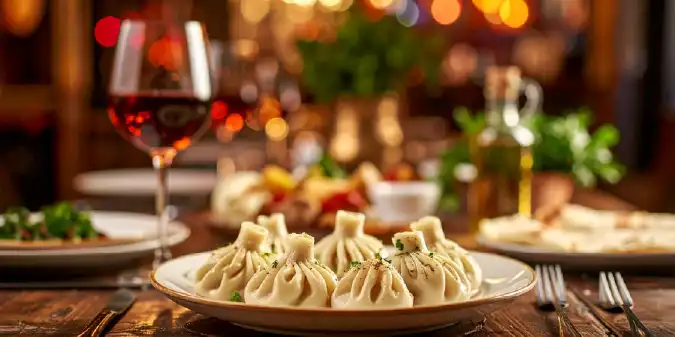
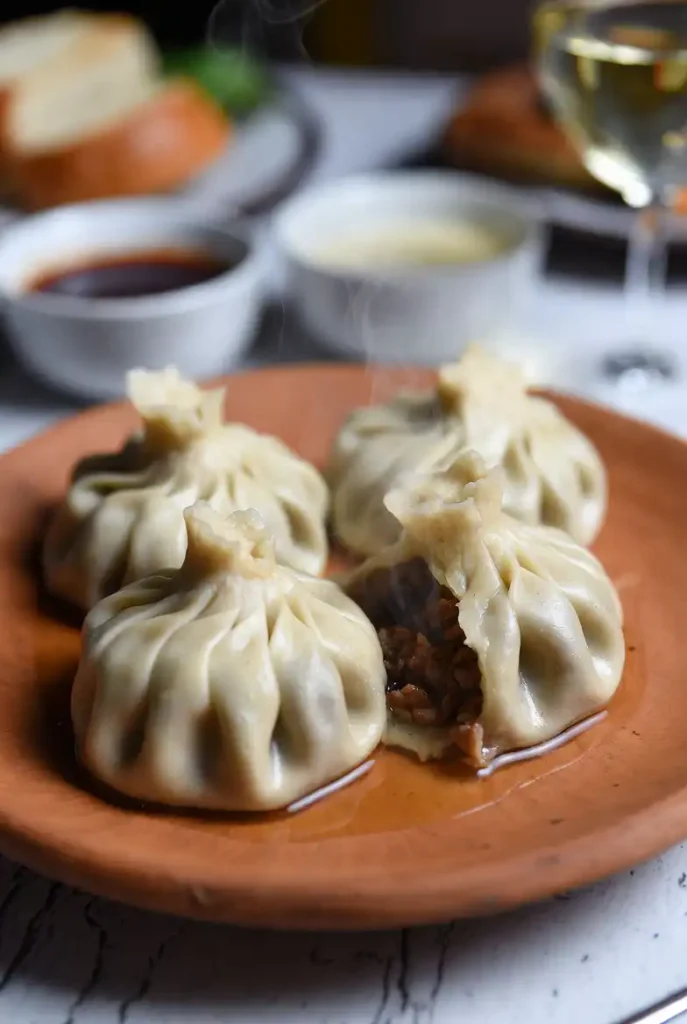
The food arrives not in courses but all at once, a landscape of dishes covering every inch of the table simultaneously. Cold plates first — salads, pickled vegetables, badrijani nigvzit, pkhali (herb-and-walnut balls), fresh cheeses. Then the hot dishes: khinkali dumplings in their small mountain of steam, khachapuri in its molten glory, roasted meats, bean stews, rich walnut sauces. Bread — always bread — torn and passed around by hand.
A supra can last two hours or six. It is calibrated not by the clock but by the mood of the table. And the mood, invariably, is generous.
Essential Supra Dishes — A Quick Reference
| Dish | What It Is |
| Khinkali | Juicy pleated dumplings filled with spiced meat broth. Never cut them — bite from the top. |
| Khachapuri | The national bread: boat-shaped, loaded with melted sulguni cheese and a runny egg. |
| Badrijani Nigvzit | Silky fried aubergine rolled around a walnut-herb paste. One of Georgia’s finest bites. |
| Satsivi | Poached chicken or turkey blanketed in a rich, golden walnut sauce spiced with fenugreek. |
| Lobiani | Flatbread stuffed with spiced kidney beans — humble, warming, unforgettable. |
| Churchkhela | Walnuts threaded on string, dipped in thickened grape juice. Georgia’s answer to the energy bar. |
| Tklapi | Dried fruit leather made from plums or cornelian cherry — tangy, sweet, ancient. |
One rule no Georgian will forgive you for breaking: never cut a khinkali with a knife.
The dumpling’s pleated knot holds a reservoir of spiced broth inside.
Hold it by the knot, bite from the bottom, drink the broth before taking the rest. The knot itself is left on the plate — a tally of how many you ate.
Kakheti: The Birthplace of Wine and the Best Wine Tours in Georgia
If the supra is Georgia’s spiritual home, Kakheti is its physical one. Stretching east from Tbilisi toward the Alazani River valley, Kakheti is the country’s most celebrated wine region — and one of the oldest wine-producing landscapes on earth. Archaeological evidence of winemaking here dates to 6000 BCE. The vines growing in these red-soiled valleys have been cultivated, interrupted, and revived across civilizations, conquests, and centuries.
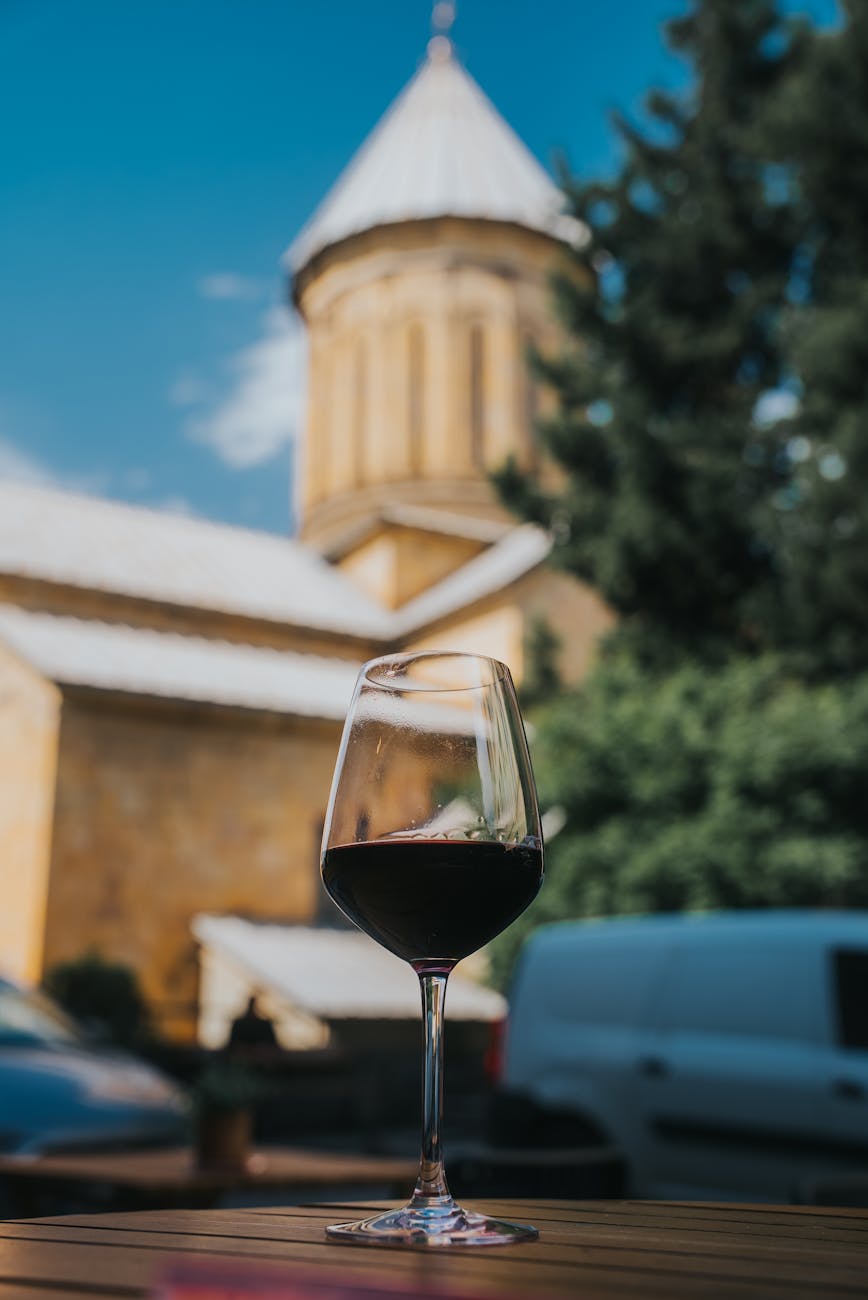
What makes Kakheti wine distinctive is not just age, but method. Traditional Georgian winemakers use qvevri — large clay amphoras buried underground — to ferment and age their wine. White grapes are fermented with their skins for months, producing what is sometimes called ‘orange wine’: amber-colored, tannic, complex, and entirely unlike anything you have encountered in a Burgundy cellar or a Napa tasting room. The UNESCO Intangible Cultural Heritage designation the tradition received in 2013 was long overdue.
The Kakheti Wine Trail
The classic wine touring loop runs through two towns that anchor the region:
- Telavi, the regional capital, sits beneath the Caucasus foothills surrounded by vineyards. The 17th-century Batonis Tsikhe fortress rises above the town, and a morning walk through the market — pomegranates, walnuts, churchkhela, golden jars of honey — sets the tone for the day ahead.
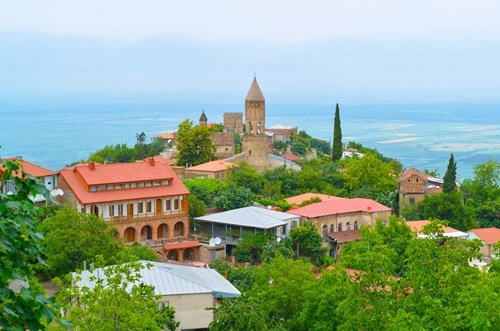
- Sighnaghi, called the ‘City of Love,’ is a hilltop town enclosed within a long medieval wall. The terracotta rooftops, the views across the Alazani Valley toward the snow-capped mountains of the Caucasus, and the wine bars that stay open for toasts until well past midnight have made it the most romantic stop on any Georgian itinerary.
Between these two towns, a series of family-run wineries and marani (wine cellars) welcome visitors to taste directly from the qvevri. These are not formal ‘wine experiences’ in the Napa mold — they are kitchen-table conversations with the winemaker, a glass of something amber poured from a clay vessel, a plate of cheese set down beside it. No appointment necessary.
The Tbilisi Old City Guide: Where to Wander, Eat, and Linger
Tbilisi is a city designed for the kind of traveler who finds the best things by getting pleasantly lost. The old city — Dzveli Tbilisi — climbs and tumbles across the hillsides above the Mtkvari River in a tangle of carved wooden balconies, Orthodox domes, Persian-style bathhouses, and vine-draped courtyards that spill into each other without warning.
Four Neighborhoods Worth Your Time
- Abanotubani — the sulfur bath district
The domed brick bathhouses of Abanotubani have been fed by natural sulfurous springs since at least the 5th century. Book a private bath for an hour. The water is hot, slightly mineral, and genuinely therapeutic. Tbilisi’s name, in fact, derives from the Georgian word for warm — a reference to these very springs.
- Narikala Fortress & the Old Town Walls
The Narikala Fortress crowns the ridge above the old city, reached either by a steep walk through winding lanes or a short cable car ride. The views from the top — the river below, the domes of the Metekhi Church, the Caucasus foothills beyond — are the ones that end up framed on walls back home.
- Fabrika & the New Tbilisi Creative Quarter
A former Soviet sewing factory converted into an open-air hub of boutiques, restaurants, and rooftop bars, Fabrika is where Tbilisi’s young creative class gathers. It sits just outside the old city boundary and makes for a perfect late-afternoon detour before the evening’s supra.
- Rustaveli Avenue & the Arts District
The main boulevard connects the parliament building to the National Museum, the Opera House, and a row of galleries and bookshops. The Georgian National Museum is non-negotiable: its collection of medieval gold jewelry and ancient artifacts provides essential context for everything you’ll see in the countryside.
Practical Notes for Food and Wine Travelers
- Best time for Kakheti wine tours: Late September through early October, during the Rtveli (grape harvest). Villages are loud with the smell of fermenting grape and every door is open.
- For the supra experience: Most family-run guesthouses in Kakheti and Tbilisi will arrange a traditional supra with advance notice. Ask your guide — it is always better experienced in a home than in a restaurant.
- Wine to look for: Rkatsiteli and Mtsvane are the dominant white varieties of Kakheti. Saperavi — a deeply pigmented red — is the one to drink with khinkali. Rkatsiteli qvevri-fermented is the orange wine to seek out.
- In Tbilisi: The old city is compact and best explored on foot. Comfortable shoes matter — the cobblestones are uneven and the hills are real. Plan at least one full day for the old city alone.
Georgia Is Just One Chapter
What makes Georgia so captivating is also what makes it the natural centerpiece of a longer journey. To the east, Azerbaijan’s fire temples and medieval caravanserais await. To the south, Armenia’s ancient monasteries and the dramatic shadow of Mount Ararat offer a spiritual counterweight to Georgia’s sensory abundance.
If you are considering the full experience — all three nations, in proper depth, without the stress of self-navigated border crossings — our seamless 14-day Caucasus tour packages bring together Georgia, Armenia, and Azerbaijan into a single, expertly guided loop. Georgia’s wine country, Armenia’s sacred monasteries, Azerbaijan’s flame-lit capital: three countries, one journey, no logistics left to chance.
| Ready to sit at Georgia’s table — and the Caucasus beyond it? Our 2026 small-group departures include a traditional supra experience, guided wine tastings in Kakheti, and full logistics across all three countries. → Explore the full 14-day Caucasus itinerary from East Site Travel |
Caucasus Tour Packages 2026 | East Site Travel | east-site.com
Frequently Asked Questions: The Georgian Supra & Wine Culture
What exactly is a Georgian Supra?
A supra is more than just a feast; it is a traditional Georgian social ritual centered around food, wine, and highly structured toasting. Led by a tamada (toastmaster), the supra transforms a meal into a storytelling event that can last for hours, celebrating everything from family and friendship to peace and history.
What are the must-try dishes at a traditional feast?
While the table is often covered in dozens of dishes, the essentials include:
Khinkali: Spiced meat dumplings filled with broth.
Khachapuri: The famous boat-shaped cheese bread topped with a runny egg.
Badrijani Nigvzit: Fried aubergine rolls with walnut-herb paste.
Satsivi: Poultry served in a rich, spiced walnut sauce.
Is there a specific way to eat Khinkali?
Yes! One of the most important practical notes for travelers is to never use a knife and fork on a khinkali. You should hold it by the dough “knot,” bite a small hole in the side to drink the broth first, and then eat the rest. Leaving the knots on your plate is a traditional way to track how many you’ve enjoyed.
What is “Orange Wine,” and why is it famous in Georgia?
In Kakheti, the birthplace of wine, white grapes are fermented with their skins, stems, and seeds in clay jars called qvevri. This ancient method produces an “amber” or orange-colored wine that is tannic and complex, offering a completely different flavor profile than Western white wines.
When is the best time to visit Georgia for wine tours?
The ideal time for Kakheti wine tours is late September through early October. This is the period of the Rtveli (grape harvest), where the air is filled with the scent of fermenting grapes and local villages celebrate with music and open doors.
How can I experience a supra as a traveler?
While many restaurants offer “tourist supras,” the most authentic experience is found in family-run guesthouses in Tbilisi old city or the Kakheti countryside. For those who want a guaranteed, high-quality experience without the stress of planning, we include traditional supras and guided tastings in our 14-day Caucasus tour.
Discover more from East Site Travel
Subscribe to get the latest posts sent to your email.